
This post may contain affiliate links. Please see our privacy policy for more details.
Dusting flour – aka bench flour – is used in baking for visual appeal and tactical purposes. In sourdough baking, dusting flour can be a key component when baking. Let us teach you more about what it is and how to use it.
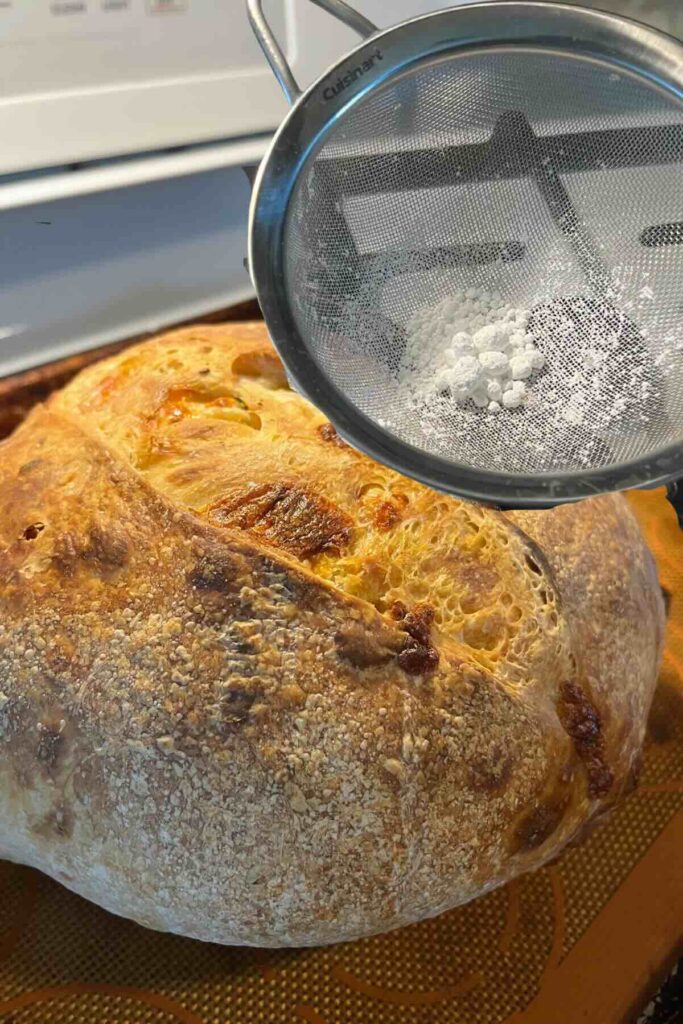
In baking, dusting flour – aka ‘bench flour’ is often used to dust the surface of a workplace to ensure baked goods do not stick while baking. In sourdough baking, we take this a step further to ensure designs stick out when scoring beautiful designs.
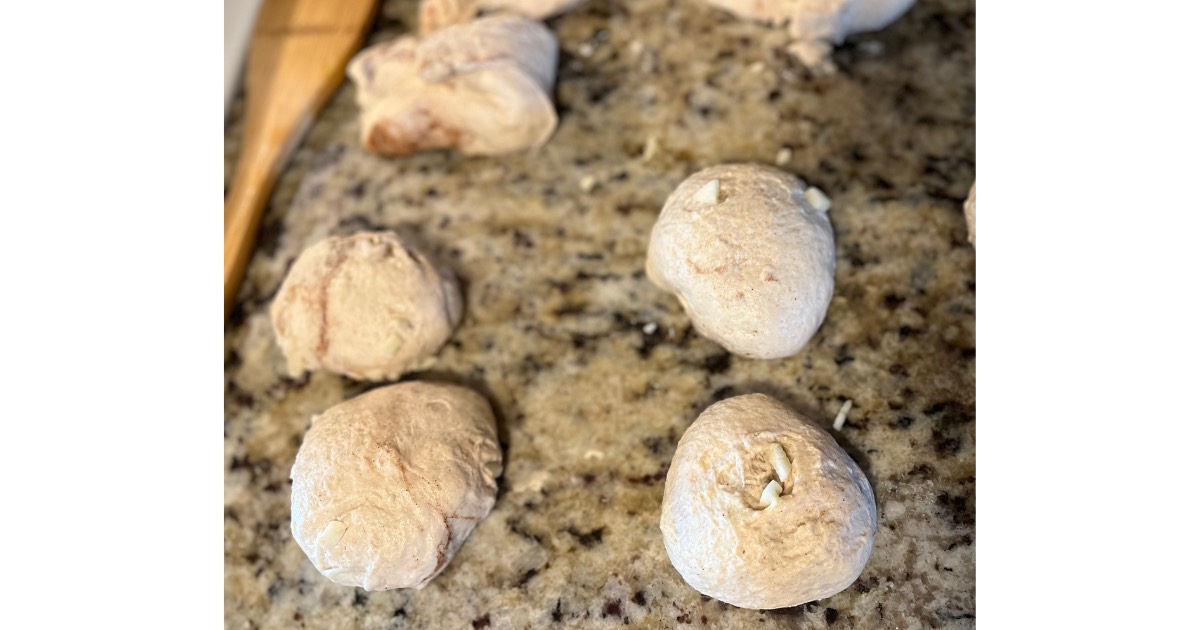
Dusting flour is often used for easier shaping with items ‘sticky’ doughs including higher hydration sourdough bread, sourdough baguettes and sourdough English muffins. It can even be used to flour a surface when shaping sourdough cinnamon rolls.
It is a useful ‘tool’ in the kitchen which we love to have on hand! We like to think of dusting flour similar to the a pen and highlighter for taking notes when reading the Bible. It helps the focal point items (words) stand out better.
What is dusting flour?
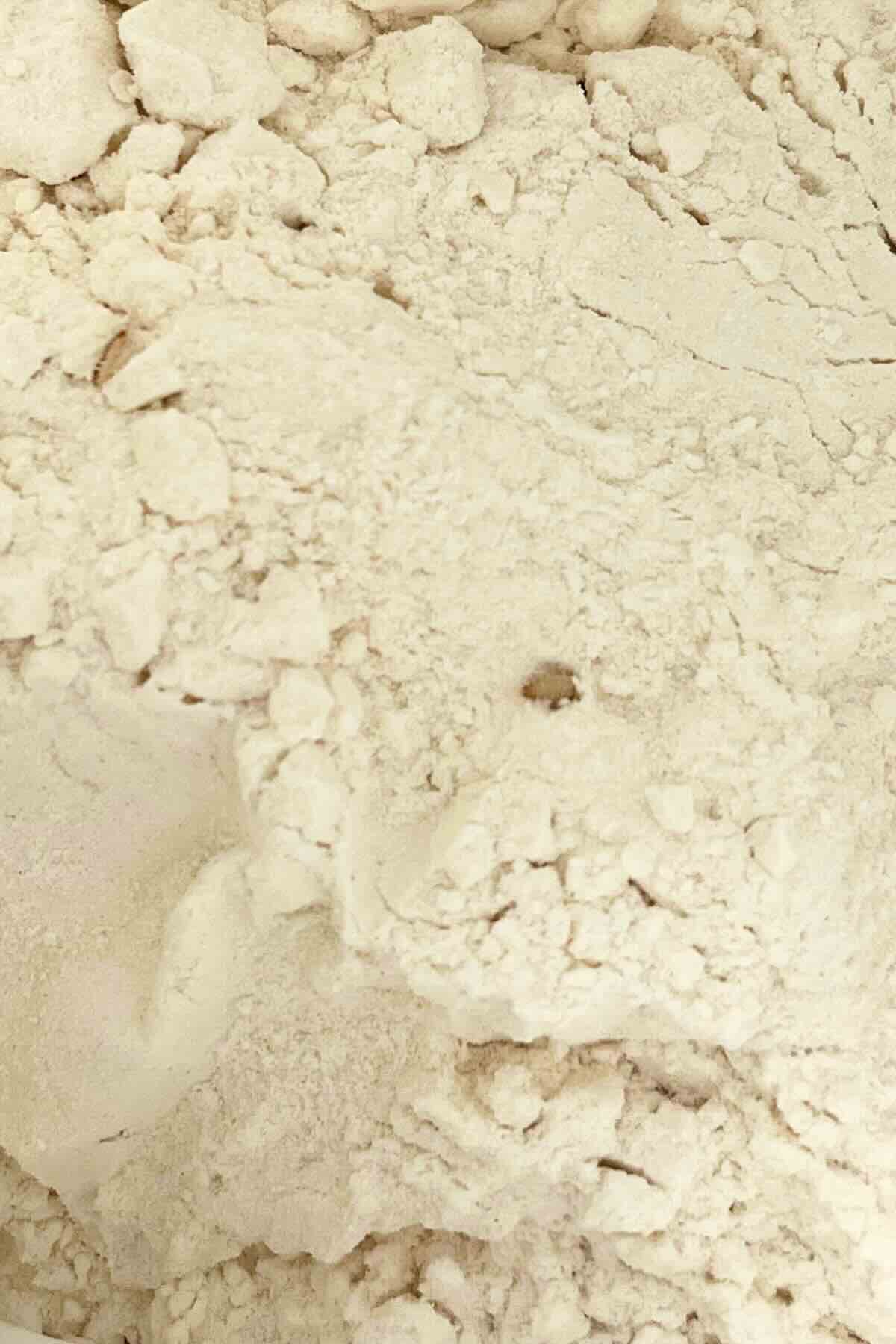
Dusting flour is flour used in baking for visual appeal and tactical purposes. In the sourdough baking community, rice flour (specifically Thai rice flour or white rice flour) and rye flour are most widely used. Tapioca flour, semolina flour, and cornstarch are also used.
From a visual perspective, dusting flour helps a design or pattern stick out on sourdough bread. From a tactical perspective, dusting flour can help dough from sticking to the counter or banneton.
The characteristics of dusting flour include lightweight and tasteless. The color is typically white (or off white) based on the type of flour used. And unless used in large quantities, it does not impact the overall texture of the bread as it is light and fluffy.
What is “the sitch” on purpose flour?
Dusting flour is different from all purpose flour. While you can ‘dust’ a loaf with all purpose flour, the color may not stand out as much as dusting flour and the texture may be different. It can also become sticky when activated with water.
All purpose flour also contains gluten – which for our gluten free friends – can be troublesome if not fermented.
Dusting flour and sourdough bread
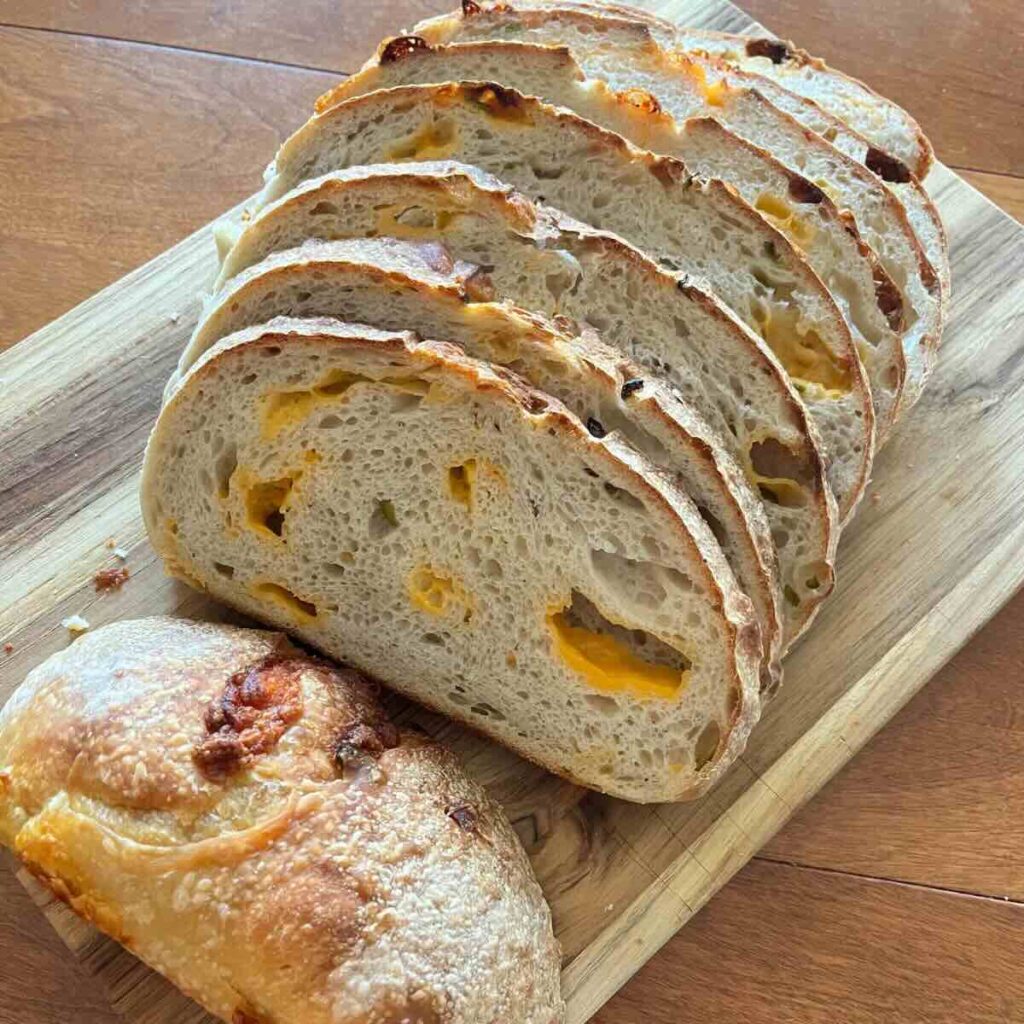
On sourdough bread, dusting flour can be used for a variety of purposes. From helping a design / scoring pattern stand out, to ensuring a sticky loaf does not stick to a pan / banneton and also for easier shaping on a surface, dusting surface can be helpful.
When using dusting flour, there are a few different methods you can use. You can use a dusting tool or a mesh strainer, sprinkle it directly on the baked goods or table with your hands or place the dough in a bowl with the flour.
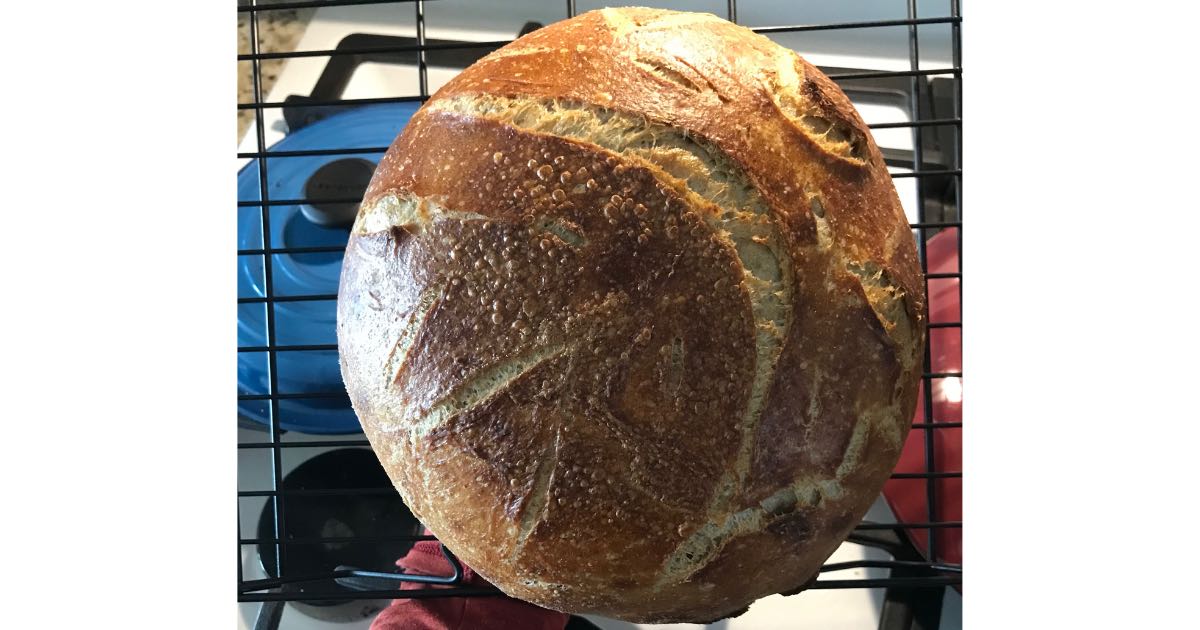
People tend to use dusting flour to make their design / scoring patterns appear brighter on sourdough bread. This is due to the difference in color from in dusting purpose flour to the flour used within a loaf of bread.
And, if you want to be real detailed and have too much dusting flour on top of your sourdough bread, consider using a food safe bamboo brush to remove it.
Sourdough English muffin tip: If making sourdough English muffins, use corn flour / corn meal to prevent them from sticking to surfaces when rising and baking.

How to make dusting flour at home
If you want to make dusting flour from scratch, you definitely can. There is no special ratio of flour – but you have a grain mill, you can grind your own dusting flour.
Dusting flour is typically rye flour and / or rice flour. To make your own dusting flour or rye and rice flour, grind 50% of each grain.

How to store dusting flour
If you are making your own dusting flour from scratch or buy a bag of rice / rye flour from the store – consider how to store it.
If making freshly ground dusting flour, only grind what you need. The flour should be used immediately for the best health benefits. If not using right away, store the grains in an airtight container (with an oxygen absorber if possible) or in the freezer.
For store bought dusting flour, consider placing in the freezer. This will also prevent weevils in flour (gross!).
Colored Dusting Flour Alternatives
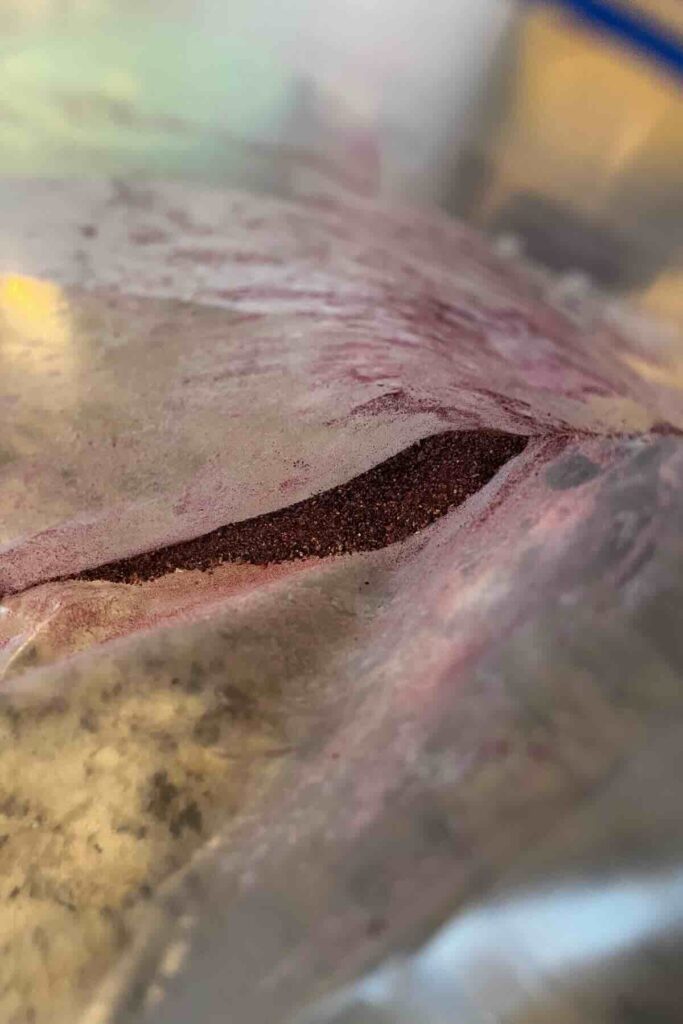
If you are making a loaf of bread and want it to ‘stand out’, consider using a colored dusting flour. Though the flavor may change due to the ingredients used, people have had luck with the options below:
- Cocoa powder (black or brown)
- Butterfly Pea flower or freeze feed blueberries (blue)
- Dried strawberries or dried beets (pulsed into a powder) (pink or red)
- Matcha (green)

Do you use dusting flour on your sourdough bread? If so, what flour do you like to use? Let us know in the comments below!


What about using luster dust on a sourdough loaf? Has anyone tried this already? I am specifically interested in a pearl dust and just wondering of it will be lost in baking before I spend money on it.
Ooh that’s a great question. I have not tried that before – but I have heard if you mix it in with rice flour (especially if it’s a different color than white), it can stand out and provide shimmer.
Please do let us know the results!