This post may contain affiliate links. Please see our privacy policy for more details.
Dense sourdough bread is not a result anyone wants when baking. A loaf that is heavy, does not rise tall and overall feels like a “flop” can be disappointing. So what causes dense sourdough bread? And how can we fix it to have tall fluffy loaves? I have a few pointers for you!
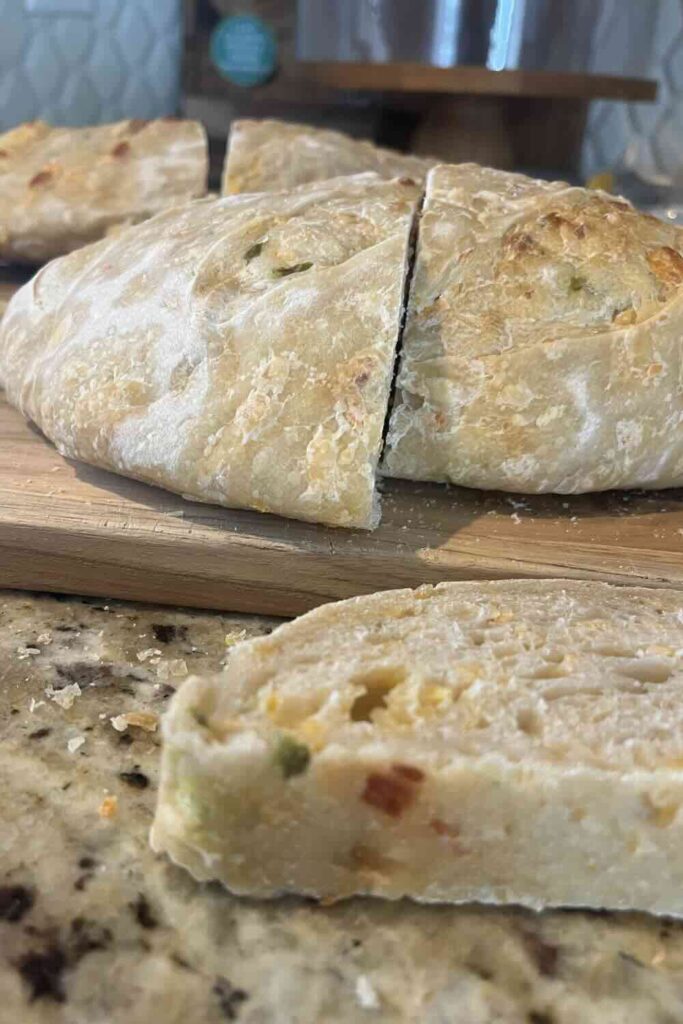
Dense sourdough bread is never fun. Not only is it disappointing to cut into the loaf, it can be equal parts frustrating to unpack what went wrong. While I have been baking for over 14 years, sourdough can be a learning curve and I have had my fair share of less than perfect loaves.
The amount of time it takes to make a loaf and the confidence you have going into it can cause frustration. I know it has for me, at least! Then I get into my head about what went wrong and how I can fix it the next time.
If you have questions running through your head like:
- Why was the bread dense?
- Did the loaf underproof? Was it overproofed?
- Was it my sourdough starter? Was it the hydration of the bread?
- Did I miss a step during the mixing or shaping?
- Did the sourdough not get cooked long enough?
- And so, many more…
You are not alone!
This blog will explore why dense sourdough bread occurs along with some tips and tricks to avoid it in the future.
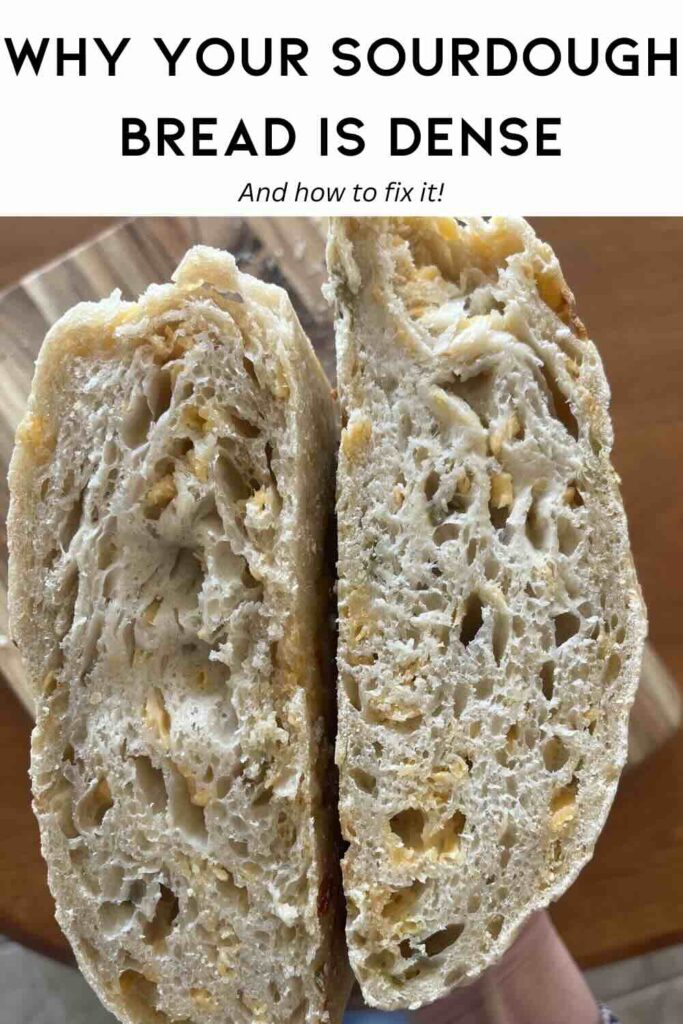
Why is my sourdough bread dense?
If you have a dense loaf of sourdough bread, there can be numerous factors causing this. From the hydration of the dough, the challenges of the flour and even the temperature of your home – these can all impact the outcome of your sourdough bread.
When it comes to a loaf of dense sourdough bread, there might be one reason causing a dense loaf or there could be multiple. Dense sourdough bread is often occurring because the yeast does not have the proper environment to create air bubbles (gas) to make it rise. It can also be caused by the strength of your sourdough starter. If you have a new starter – it may not produce the fluffiest, tallest loaf of bread.
Thankfully, there are signs which can help point to why sourdough bread is dense.
What does dense sourdough bread look like?
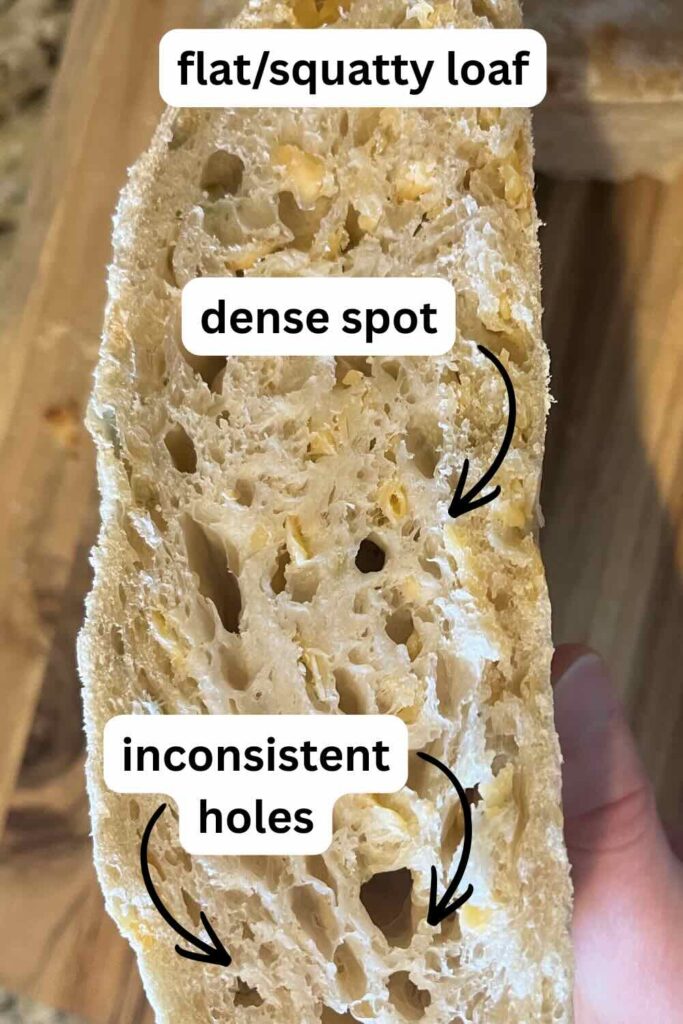
Dense sourdough bread is relatively easy to spot. The bread will not be as light and airy and the overall loaf may seem heavy. Other signs of dense sourdough bread include:
- A gummy / tight crumb
- The bread may look raw or underbaked
- The loaf is heavy
- When ‘knocked’ on the bottom – the sound is not hollow
- The dough feels dense when shaping before baking
- Minimal holes when cut
- A flat loaf that does not rise to it’s highest potential.
Troubleshooting dense sourdough bread
Before you throw the towel in and toss your sourdough starter in the trash, I recommend you look at a few different variables. Unfortunately, there is no way to ‘fix’ a dense loaf of sourdough bread once it’s baked. But you can troubleshoot to tackle the issue on your next baking session.
- Check the temperature of your home
- If you are dealing with warm weather, there is a different approach to handling sourdough than in cold weather.
- How did you shape your loaf?
- If your loaf was shaped too tightly, the crust may not be able to expand. You have to be gentle when shaping your dough, making sure not to pop too many bubbles and that it may be pulled to ‘tight’ on the counter during pre-shape.
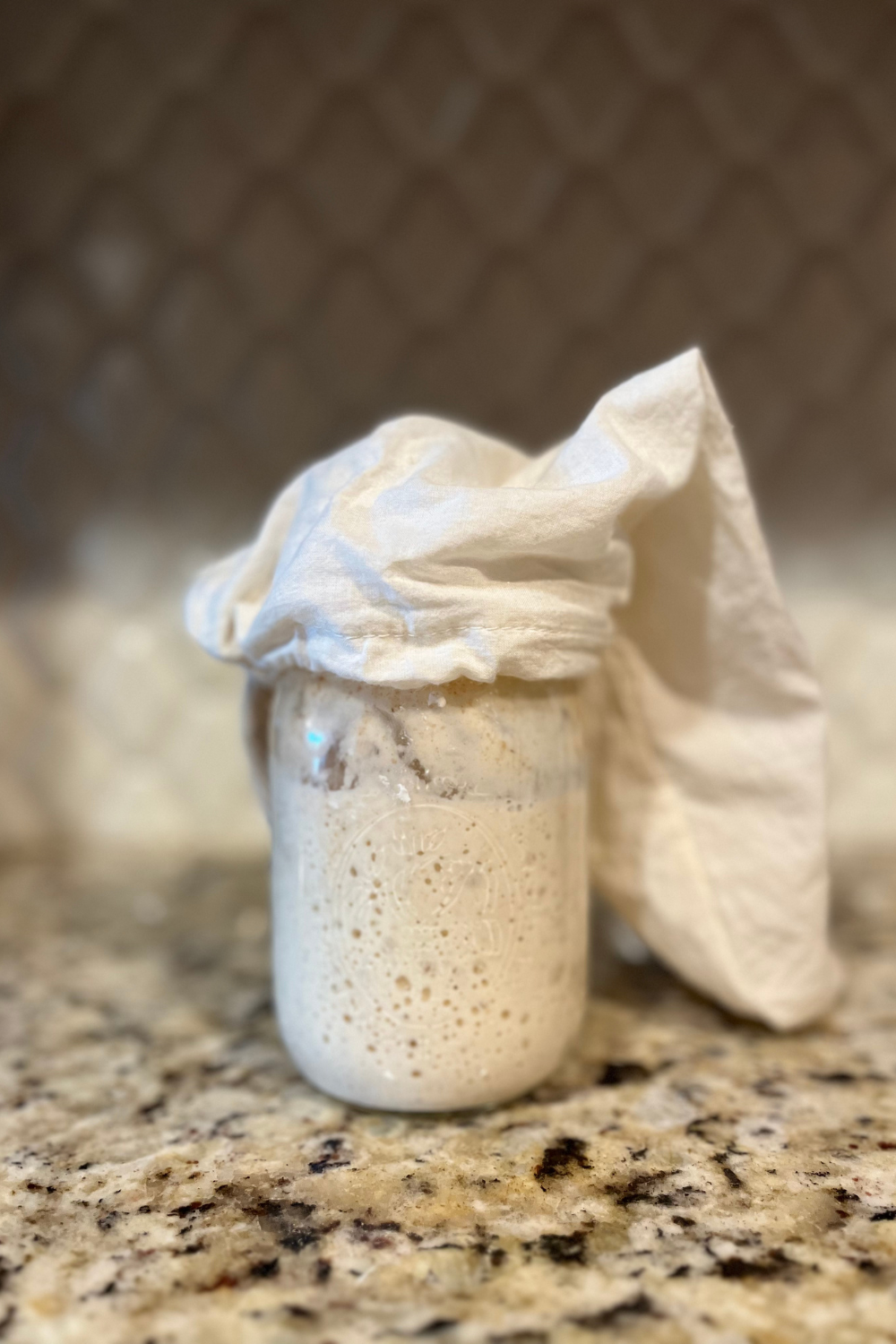
- Is your sourdough starter ready?
- If you are using a new sourdough starter that may not be active ‘enough’ to start baking with – you might have dense bread. Sometimes, a sluggish starter that is not ready can create dense sourdough bread as a result.
- Active sourdough vs. sourdough discard
- If you are using active, fed starter, your results may differ than with sourdough discard. There is a difference between active starter vs. sourdough discard – and the results do show in final baked goods.
- Typically, you will have fluffier, lighter bread if you use sourdough which has been recently fed and is on the counter (IE at peak) vs sourdough starter which has been sitting in the fridge.
- Did you change any variables?
- Did you change any variables from your normal routine? Sometimes these slight changes can cause the difference.
- Does the recipe contain inclusions?
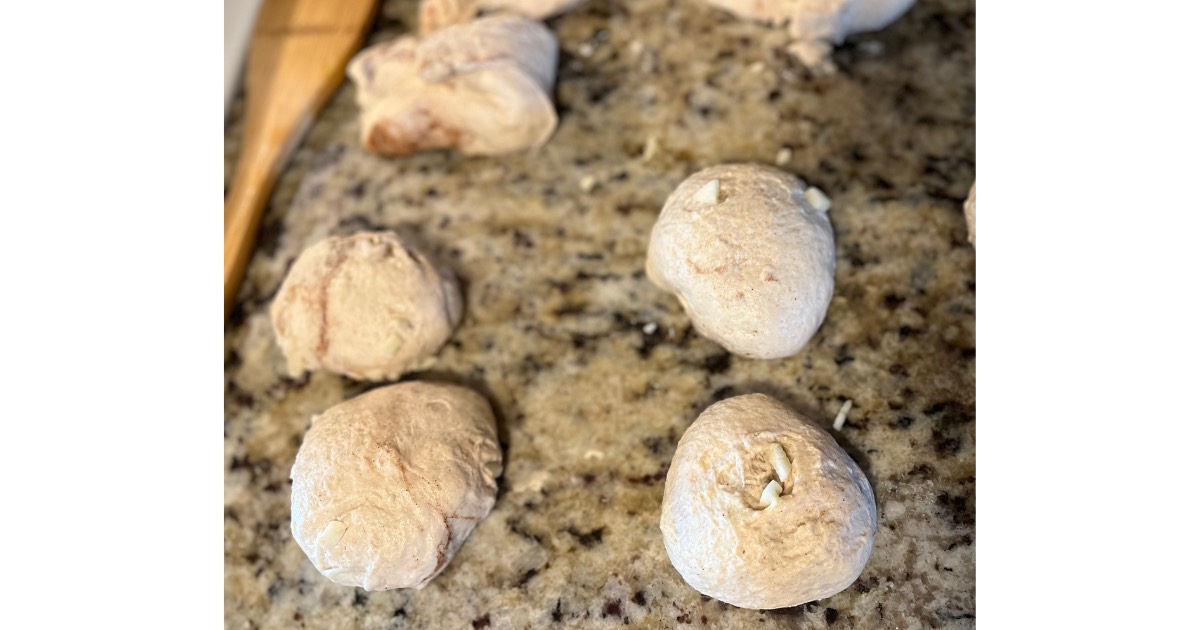
- If you normally bake sourdough bread without inclusions and this time it did? Inclusions can interfere with how well bread rises (especially when adding cinnamon to sourdough bread).
- Was it the fermentation?
- Sometimes, bulk fermentation can be tricky to handle and judge if bread if well-proofed. Underproofed sourdough bread is typically the leading cause of dense sourdough bread. Following a bulk fermentation guide can be helpful.
- Did you forget the salt or add too much salt?
- Yup – sometimes forgetting to add the salt can result in dense sourdough bread because the gluten structures are not able to develop as easily. (And it can lack in flavor, too).
- And if you added too much salt, it can cause the yeast not to rise.
- Is it the flour?
- If you like Kirkland flour, there have been some known issues as of recent. Some bakers report the hydration of their loaf has changed – resulting in less oven spring and more dense bread. The hydration changes can cause problems in the end.
- While Costco defends their flour, bakers are having problems with Kirkland flour. Many are making the switch to Central Milling via Azure standard and having better results.
- If you like Kirkland flour, there have been some known issues as of recent. Some bakers report the hydration of their loaf has changed – resulting in less oven spring and more dense bread. The hydration changes can cause problems in the end.
- Be honest – was the bread cooked long enough?
- One of our favorite kitchen tools is a thermometer. When bread looks ‘done’ on the outside, it might not be done on the inside. A thermometer can be a game changer in the kitchen. I highly recommend it as apart of our 5 sourdough tools for beginners.
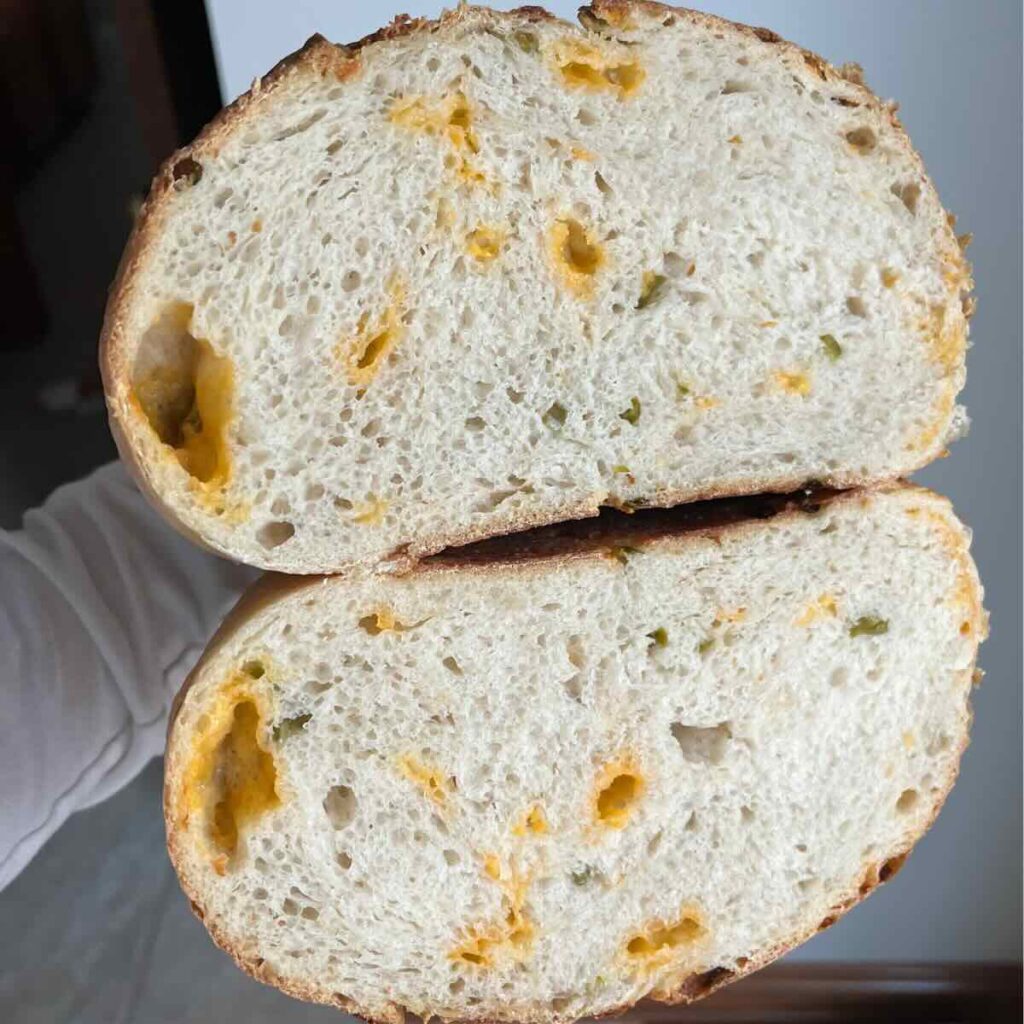
How to fix sourdough so bread is not dense in the future
Once you have worked through troubleshooting the cause for dense sourdough bread, consider what you can do in the future to help prevent it.
Think of the cause and what the effect was. Consider what you think occurred and how you might be able to fix it.
- Do you need to watch your dough over the clock?
- Was it a variable out of your control, like flour?
- Is it something you can change in the future – like waiting for your sourdough starter to be ‘ready’? or manipulating the temperature of your dough (or home?)
And if all else fails, consider trying a new sourdough recipe. We have a few tried and true recipes like our Aldi Sourdough Bread Copycat and our jalapeño cheddar sourdough bread recipe that may give you a few ideas to try while baking a fresh loaf of bread.
What to do with dense sourdough bread?
When all else fails, you can always turn breads into sourdough breadcrumbs or croutons. (Have you tried making sourdough Mac and cheese bites with breadcrumbs? They are delicious!).
I have an entire list on how to use leftover bread which can give you inspiration of what to turn it into as the texture can be similar to stale bread.
Of course, use your judgement. Generally speaking, dense sourdough bread is ok to eat. However, if the sourdough bread is raw, make sure to cook it more. And if it smells off or looks off, do not eat it.

Sometimes, at the end of the day, you have to remember it might be nothing wrong with you – it might have just been a bad day! So brush your hands off, throw the loaf to the birds and start a new loaf.