
This post may contain affiliate links. Please see our privacy policy for more details.
Jump to RecipeCranberry walnut sourdough bread is a hearty sourdough bread every baker should try. The bread is chewy and flavorful, leaving the bread a delicious pairing to any meal (or enjoyed on its own).
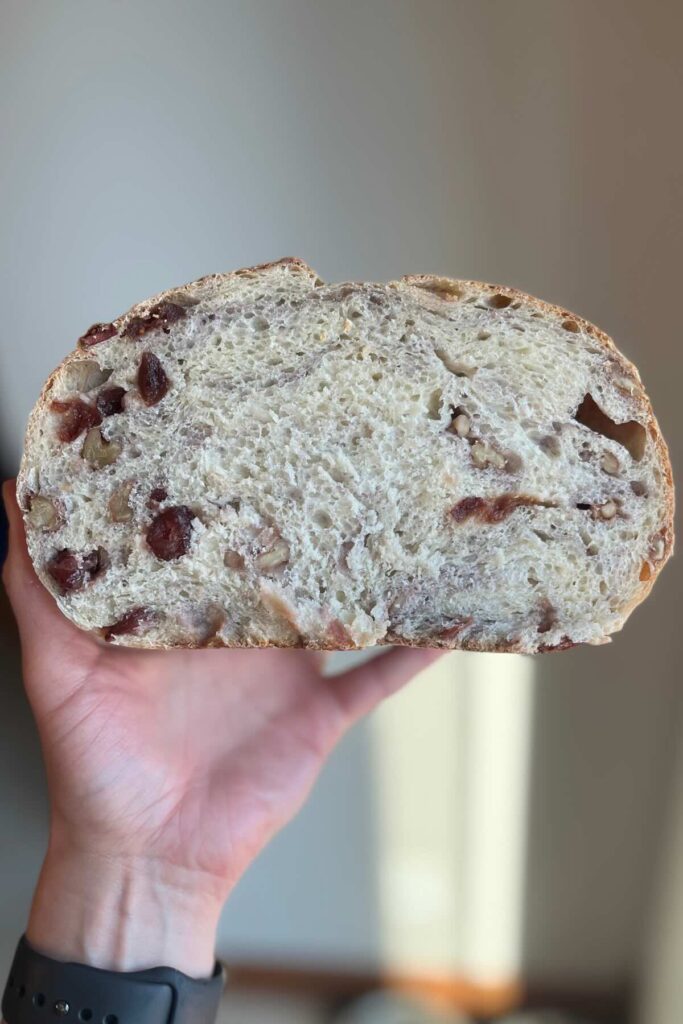
We recently tried a cranberry walnut loaf at a local sourdough bakery. Immediately knew I wanted to try replicating this recipe the moment after I had my first slice. This combination is one of our favorite sourdough inclusion recipes (and for a good reason!).
Like we do when recipe testing sourdough recipes for our blog, it took a few tries to get it right. And we truly feel this is the best cranberry walnut bread recipe (and it’s made with sourdough to make it even better).
This bread is the perfect staple for any household which just wants something different than an original sourdough bread loaf. It is hearty without being heavy. It works well as the base for a sweet or savory recipe. We have over 40 different ways to top sourdough bread, though toasting a slice and adding cream cheese with cinnamon sugar is just top notch.
While walnuts do not regularly make it into our recipes, they are one of our favorite nuts to utilize. We tend to lean more on almonds within our household however, cranberry walnut is a combination we adore.
It is funny to me how people either love or dislike walnuts. From a biblical perspective, walnuts are not included within the Bible however, some people like to think the hull, shell, and kernel have to do with the Bible. That the three layers are similar to Father, Son and Holy Spirit.
And that as we read the Bible (cracking of the shell) to words are revealed (the nut). People also symbolize walnuts are shaped like the brain and are good for your heart – just like how reading the Bible is good for your mind and soul.

Why you will love this recipe
Kitchen Equipment
To make this sourdough bread, we use a kitchen scale, one large mixing bowl equipped with a lid, a tea towel, a bread lame, a baking sheet, a silicone mat (or parchment paper) and a wire cooling rack.

Ingredients for cranberry walnut sourdough bread
There are a few key ingredients within this recipe including dried cranberries, walnuts, and sourdough discard. For a full detailed list of ingredients, please scroll to the bottom of the blog.
Dried cranberries: We prefer to use dried cranberries with this recipe because of their texture and flavor. Dried cranberries are equal parts, sweet and tangy which compliment the sourdough discard well.
Walnuts: Walnuts are known for their silky texture and being a soft nut compared to others. They are rich in vitamins and nutrients, including omega 3’s, which can be good for brain health. In this recipe, they give a little bit of extra structure to the sourdough bread without making it crunchy or heavy.
Sourdough discard: Of course a sourdough bread recipe would not be the some without sourdough discard! We make our sourdough starter from scratch and prefer this recipe when the starter is at peak levels for the most bubbles within our bread.
How to make sourdough bread with cranberry and walnuts

Step 1: Incorporate ingredients and allow dough to ferment on countertop until doubled in size.

Step 2: Gently scoop out the cranberry walnut dough, being careful not to pop too many bubbles.

Step 3: Shape sourdough bread into loaf – place into the fridge to bulk ferment.

Step 4: Place on baking sheet and slice down the center.

Step 5: Bake and cool on wire rack.

Step 6: Slice and enjoy!
How to store
We store this loaf on the countertop for 3 day (before we eat it all). If storing within the freezer, slice the bread and place it in the fridge overnight before placing it into the freezer. This reduces the changes of the bread slices freezing together or getting freezer burnt. Store in a freezer ziplock bag for up to three months.

Frequently Asked Questions

Cranberry Walnut Sourdough Bread
Equipment
- 1 Kitchen Scale
- 1 Large Mixing Bowl (with lid)
- 1 Tea Towel
- 1 Bread Lame
- 1 Sheet Pan
- 1 Silicone Baking Sheet
- 1 Wire Rack
- 1 Kitchen Thermometer Optional
Ingredients
- 11.5 ounces All Purpose Flour
- 4.8 ounces Bread Flour
- 3.5 ounces Sourdough Starter Active / at peak*
- 10-15 ounces Water See below 'Notes' on water
- 0.4 ounce Salt
- 2 ounce Dried Cranberries
- 3 ounces Walnuts Chopped
Instructions
- Prepare sourdough discard so it is active and at peak when combining with ingredients.
- Combine water and flour together. Stir together to form a shaggy dough. Cover with a lid or wet tea towel. Allow to autolayse for 30 minutes.
- Chop walnuts and measure out cranberries.
- Once autolayse is complete, add sourdough starter and salt to the flour and water. Combine until you can no longer feel the granules of salt (about five minutes). Allow the bread to sit for 15 minutes.
Stretch and Folds / Countertop Fermentation
- Begin series of stretch and folds. Use one hand to stretch the bread and fold it over the top. Complete stretch and fold four (4) to six (6) times – turning the bowl 90 degrees after each stretch and fold. Cover the bowl after stretch and folds are complete, allowing the dough to rest.On the second set of stretch and folds (stretching/folding 4-6 times), incorporate the cranberries and walnuts. The sourdough bread inclusions will fold in and incorporate within the bowl the more stretch and folds you do. Complete stretch and folds four times. Beginning with every 15 minutes and increasing to every 30 minutes.Stretch and fold series will look like: 15-30-30-30. Once the stretch and folds are complete, cover the bread with a lid or a damp tea towel and allow to sit on the countertop until it has doubled in size (about 12-14 hours depending on the temperature of your home).
Shaping / Bulk Fermentation
- The countertop fermentation is complete once the dough has doubled in size, the bread is jiggly when the bowl is shaken and large bubbles are on the surface of the dough.
- Pour sourdough bread onto the countertop and shape – being sure to pop any large bubbles. Gently use both hands and perform the cupping method to pull bread towards you and turn in a circular motion. This will help to build surface tension on the bread. Be sure not to pull too tight or the cranberries and walnuts will pop out of the bread. Remove any cranberries and walnuts that are on the surface of the dough, placing them under the bottom of the bread as they will burn as the bread bakes.
- Place in a bowl and wrap with a tea towel. Cover and place in the fridge for 12-48 hours (depending on personal sour preference).
Bake and Storage
- When ready to bake, preheat the oven to 425 degrees. Place the bread on a sheet pan with a silicone mat and score down the center.Bake for 30 to 35 minutes. The bread will be hard to the touch on the outside and will become less stiff when removed from the oven. If temping the bread, the internal temperature it should be anywhere from 190 to 210°F. The longer the bread cooks, the harder the crust will be.
- Remove from the oven and allow to cool at room temperature on a wire rack until ready to slice. We prefer to allow ours to cool overnight though you can cut it earlier, if this fits your timeline better.
- You can store this bread at room temperature for up to three days. At that point we like to slice the bread and place it in the fridge overnight and then into the freezer in the next day. This ensures that the bread has time to cool before it goes in the freezer and has less chance of getting freezer burnt or sticking together
Video
Notes
- We have made this bread a handful of times. We have used both active sourdough and sourdough discard. For higher rise, more holes and fluffier bread – use active starter as opposed to discard which has been sitting in the fridge.
- If your sourdough starter has been sitting in the fridge, consider feeding 1-2 times before using within the recipe.
- Sourdough recipes can be finicky. By making enough loaves of bread we know the ‘right’ texture for our bread. This is where it has enough stretch but not ‘soupy’ when completing stretch and folds.
- Temperature, sourdough starter and the length of time of autolayse can control how ‘wet’ a recipe is. We like to add more water after the autolayse is complete and the bread has been initially mixed (sourdough starter and salt added in) if we feel it needs more water.
- If needed, increase water 1 ounce at a time. The higher hydration = the chance for more holes!
- We like to use dried (sweetened) cranberries within this recipe. We have not tried this recipe with fresh cranberries or canned cranberries – therefore we do not have any recommendations on how to incorporate these as it will change the overall texture and flavor of the bread.
- You can adjust the ‘sour’ flavor within sourdough bread by controlling the length of time in which it ferments. This time starts from the moment the bread is mixed together until it is cooked. To extend the time a bread sits – extend the bulk fermentation period.
- For non-sourdough lovers: 18 hours is the best point. For us, this is a 10-13 hour countertop ferment and 5-8 hour fridge bulk fermentation period.
- For sourdough lovers: 24-36 hours is the best point. For us this is a 10-13 hour countertop ferment and a 14-24 hour fridge ferment.
Nutrition

Have you ever had a sweet sourdough loaf like this one? What do you like to use the bread for? Let us know in the comments below!




This cranberry walnut sourdough recipe sounds delicious and unique. I love how it combines tart cranberries with crunchy walnuts for a perfect texture contrast. Definitely trying this soon!