
This post may contain affiliate links. Please see our privacy policy for more details.
Jump to RecipeSourdough English muffins are a light and fluffy bread known for a slight chew, round shape and nooks and crannies on the inside. These English muffins use sourdough starter to rise, all thanks to the fermentation created from wild yeast. They are the neutral in flavor – making them the perfect vessel for any topping.

In our opinion, sourdough English muffins are one of the most undervalued bread. We feel they are the perfect ‘vessel’ for peanut butter and taste delicious when made as the base of a sandwich. Really any of the hundreds of ways you can dress up sourdough bread- you can do the same with English muffins. (And if you need inspiration on how to dress up your bread, here are 40+ ideas to eat sourdough bread for you!)
We love making English muffins into a breakfast sandwich (complete with a farm fresh egg, cheese and a chicken sausage). And we love making them into savory lunch (or dinner) option with lunch meat, cheese, tomato, and green olives (AKA a London Muffin).
What I love about this recipe is not only the diverse ways to top the bread, but also the ways to prepare and cook the dough. You can make this as a long fermented recipe for extra gut healthy benefits (which our gluten sensitive stomach loves) or they can be made as a same day sourdough English muffin recipe.
You can also cook these on the stove (in a cast iron, on a griddle or in a pan), in the oven, or a combination of both. This not only saves time, but allows flexibility based on what you want your cooking experience to be. Are you starting to see why we believe making sourdough English muffins at home is the best?
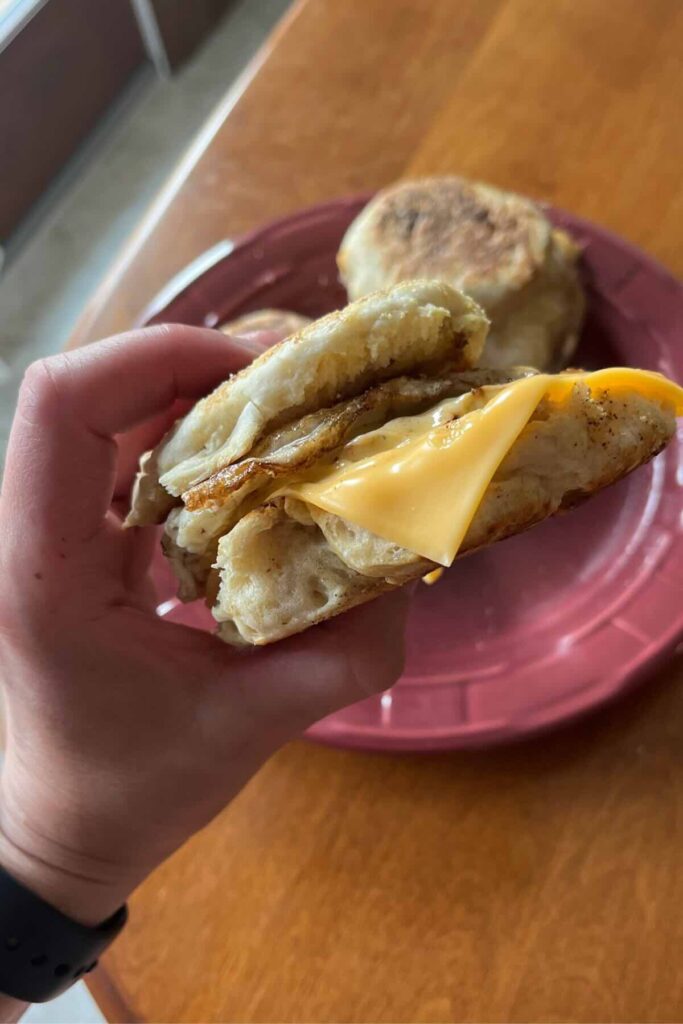
Why you will love this recipe
Kitchen Equipment
To begin, you will need a large mixing bowl (preferably with a lid), a bench scraper and a method to cook them.
We make these sourdough English muffins in a variety of methods – stovetop (on a griddle, in acast iron skillet or in a pan). You can also bake them in the oven or on a sheet pan. A thermometer is also very important with English muffins as it can be difficult to check for ‘doneness’ simply by looks.
We have also heard of people making a large batch of sourdough English muffins on the Blackstone – (we will be trying that this summer!)
Ingredients for sourdough English muffins
There are a few key ingredients for sourdough English muffins include sourdough starter and corn meal. For a full list of ingredients, head to the recipe card located at the bottom of the blog.
Sourdough Starter: Sourdough is such a powerful tool in your kitchen. The importance of sourdough within this recipe is to help the English muffins ferment and rise! This recipe specifically uses active sourdough starter to help the dough ferment and create the classic ‘nooks and crannies’ found within English muffins. While you can use sourdough discard (from the fridge), the English muffins may not be as fluffy and they may take longer to ferment than their counterpart fed with active sourdough starter. The recipes goes through a secondary rise – all thanks to the power of wild yeast.
And if you are confused on the difference between sourdough discard verses active sourdough starter, this article explains what sourdough discard is.
Corn Meal: To make a classic English Muffins, you will want corn meal (or polenta) to coat the exterior of the English muffin. This will also ensure less chances of the English muffin sticking to your baking vessel.
Fun fact – did you know if you own a grain mill, you can even grind your own corn?!
How to make sourdough English muffins
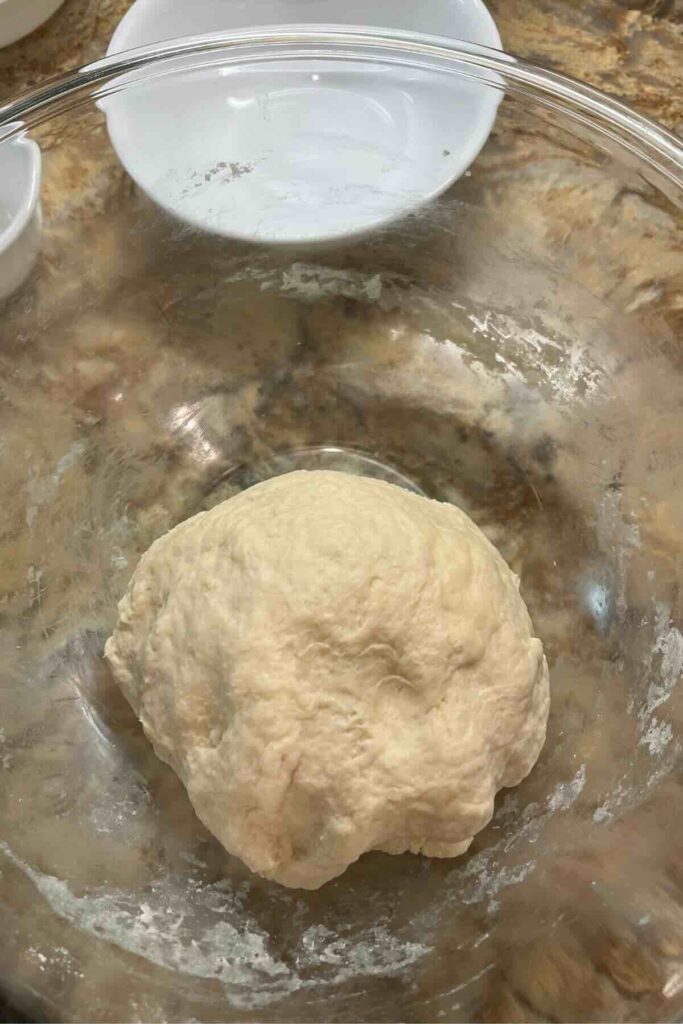
Step 1: Stir the dough together.
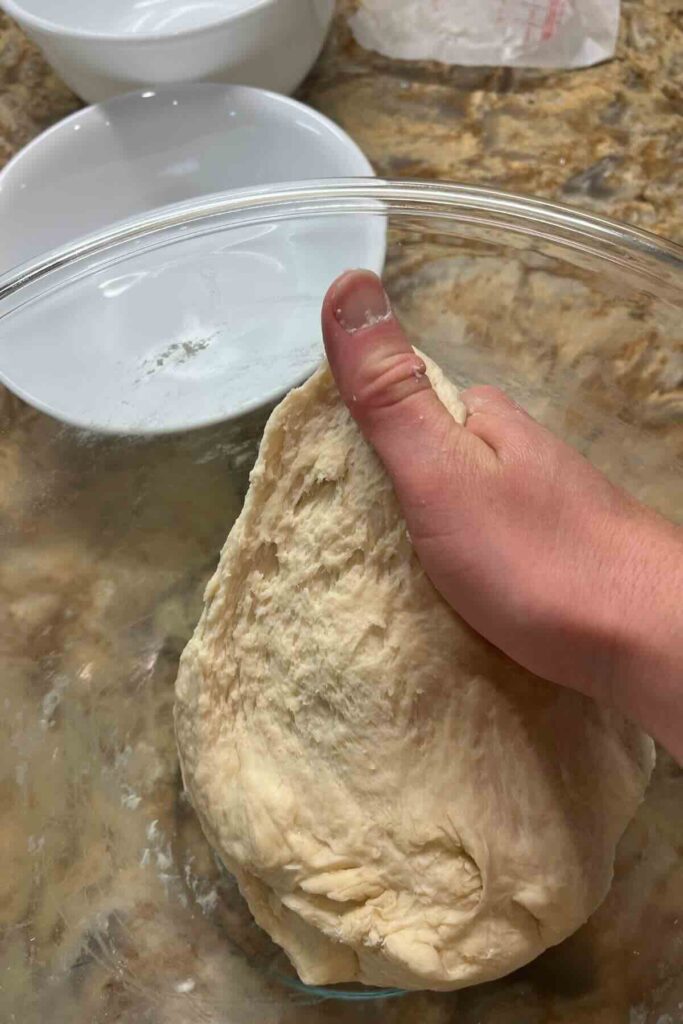
Step 2: Stretch and fold dough before bulk fermenting on the countertop overnight.
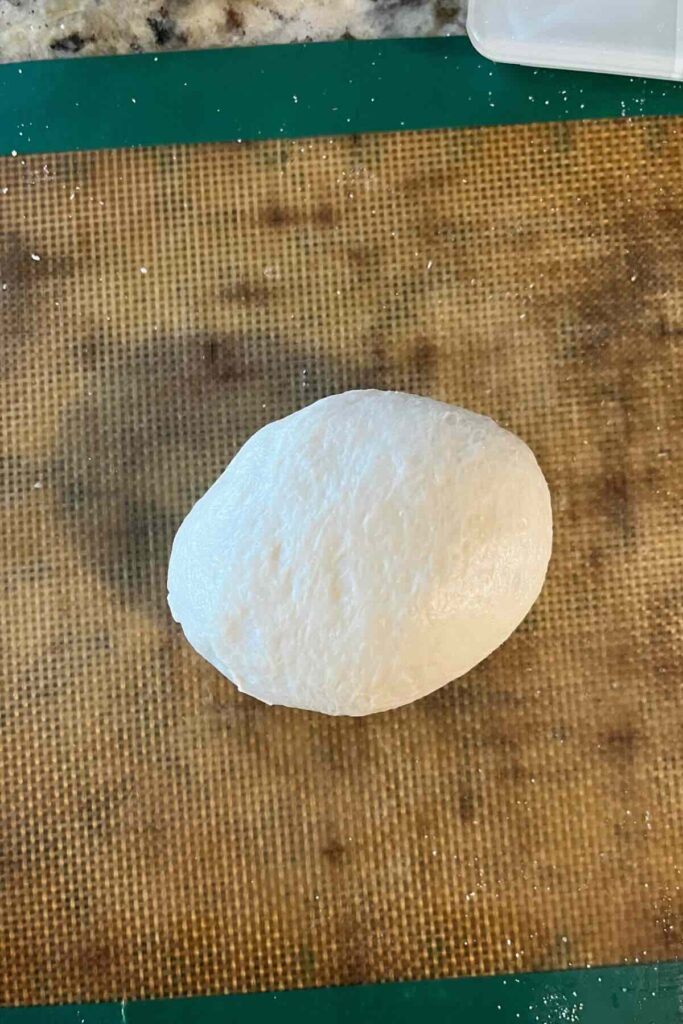
Step 3: Cut and shape.
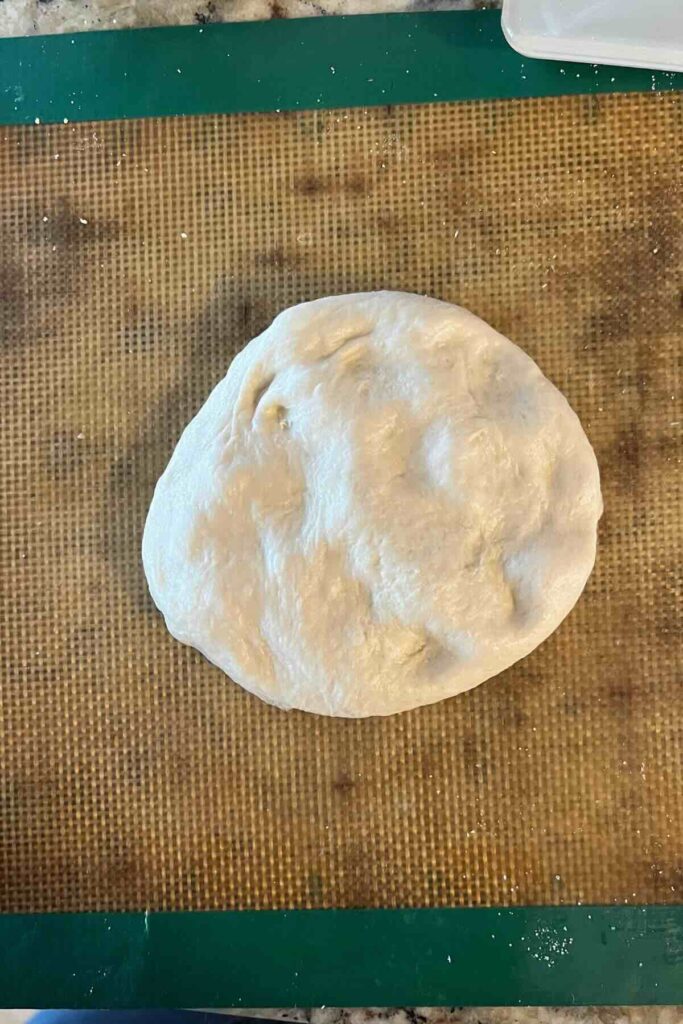
Step 4: Press down into a round shape.
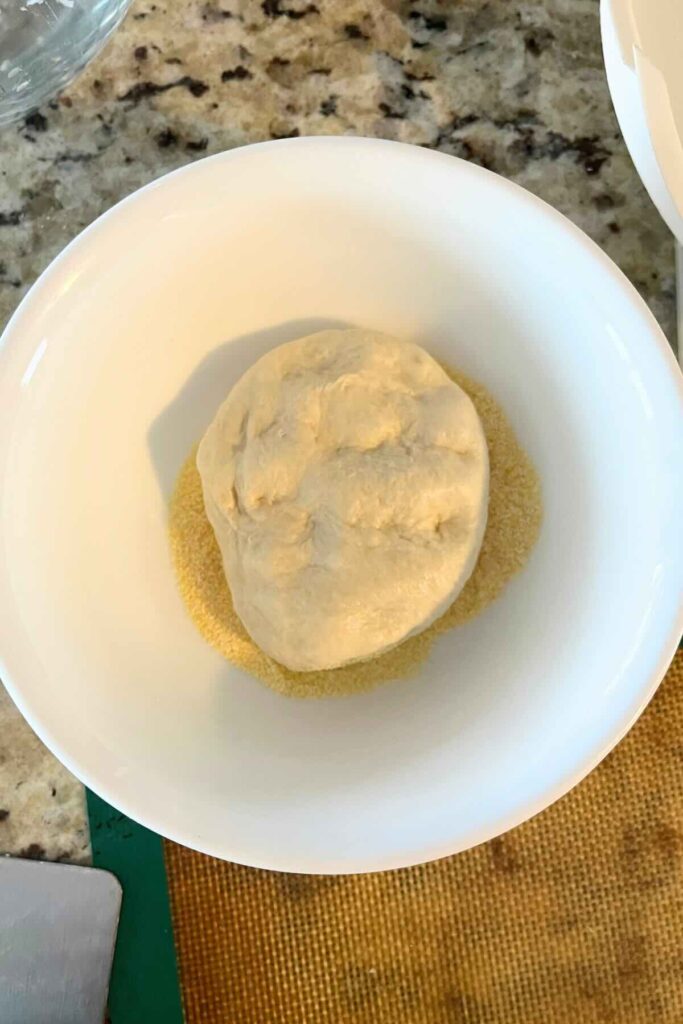
Step 5: Cover in corn meal (on both sides).
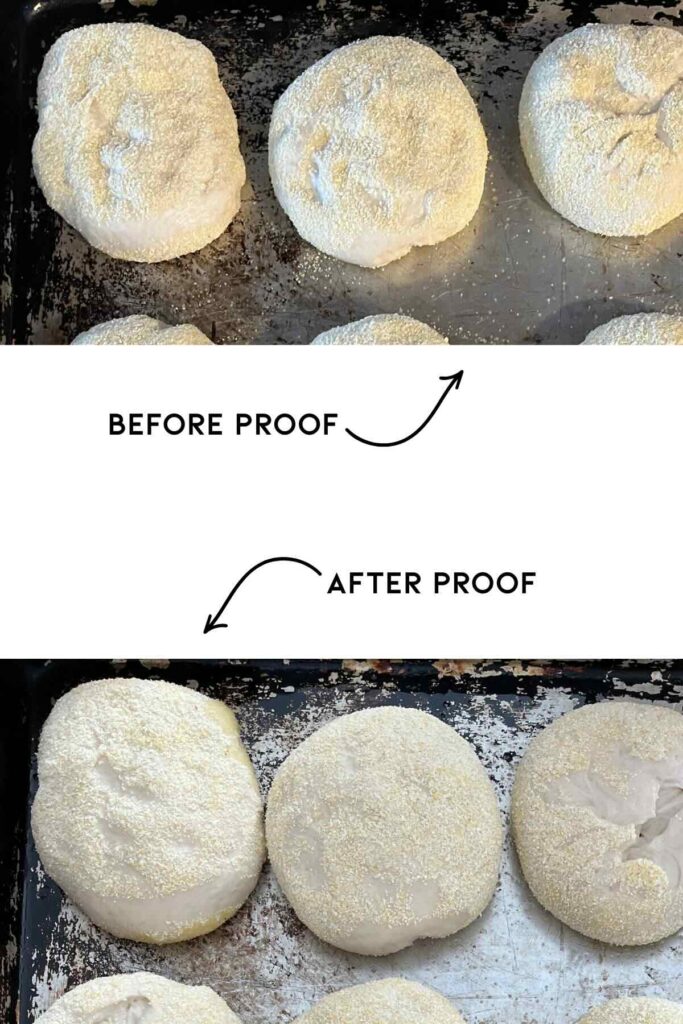
Step 6: Allow cookies to complete second proof on a sheet pan. (The key to nooks and crannies!)
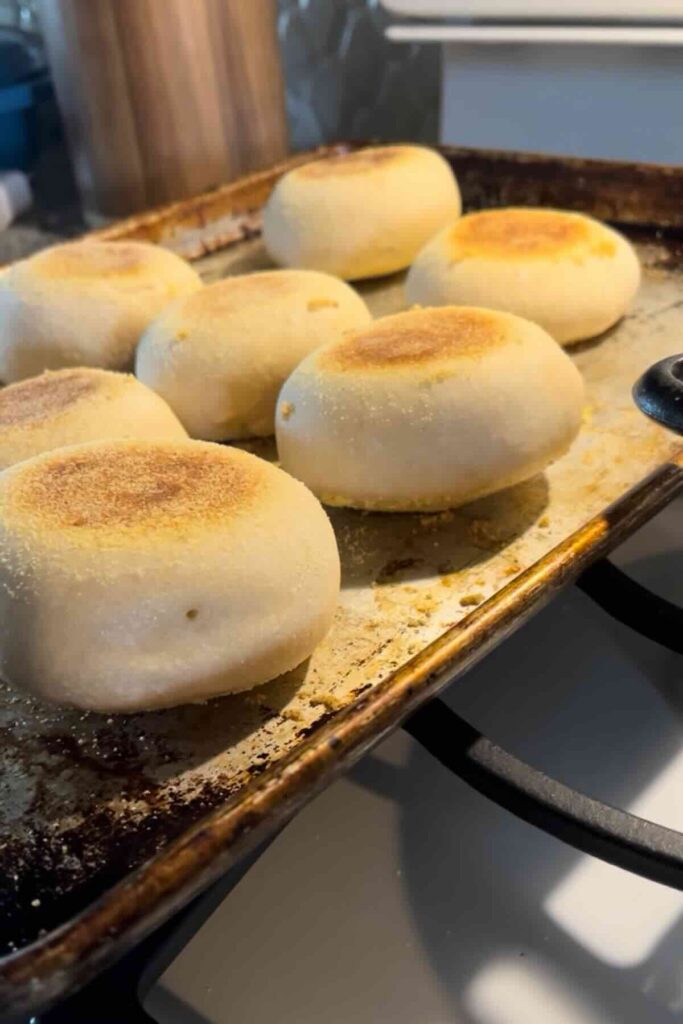
Step 7 (option A): Bake on a sheet pan.
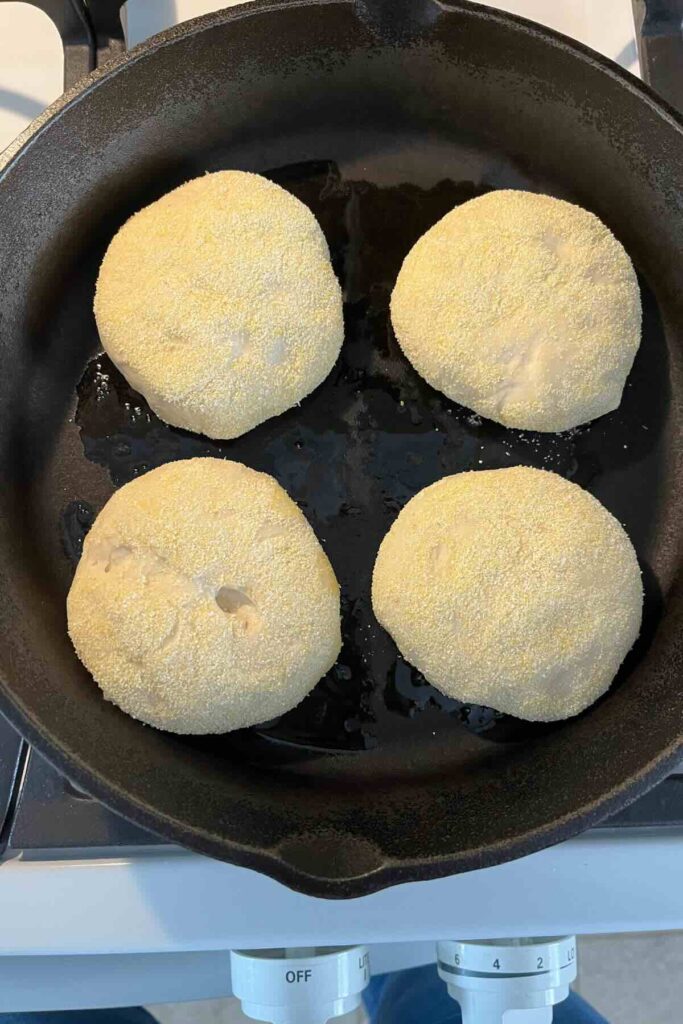
Step 7 (option B): Bake in a cast iron skillet.
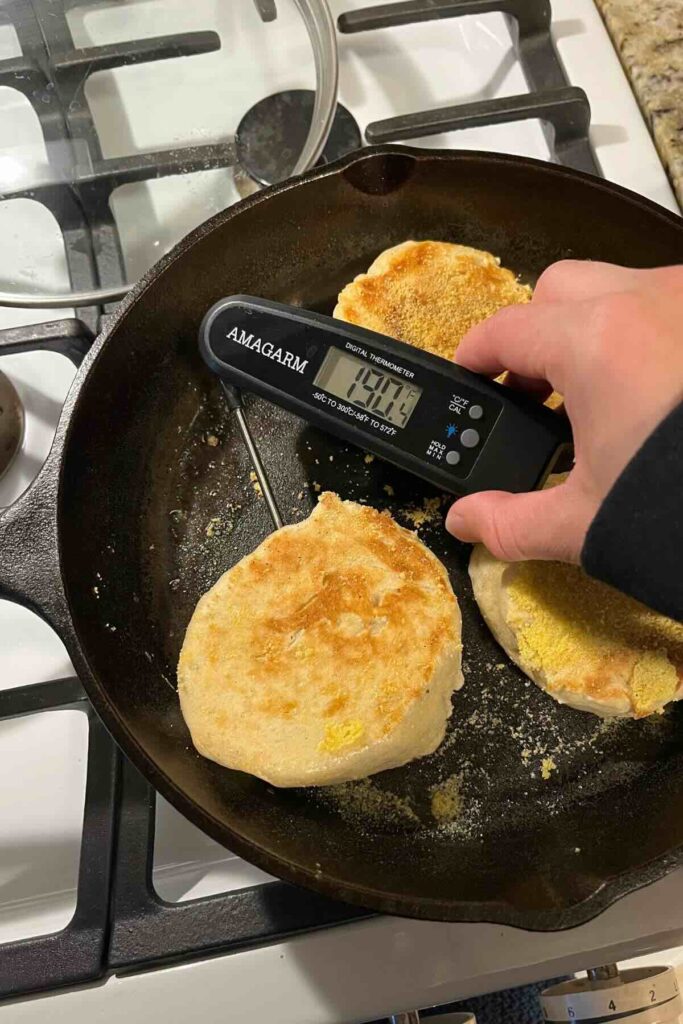
Step 8: Check temperature of English muffins.
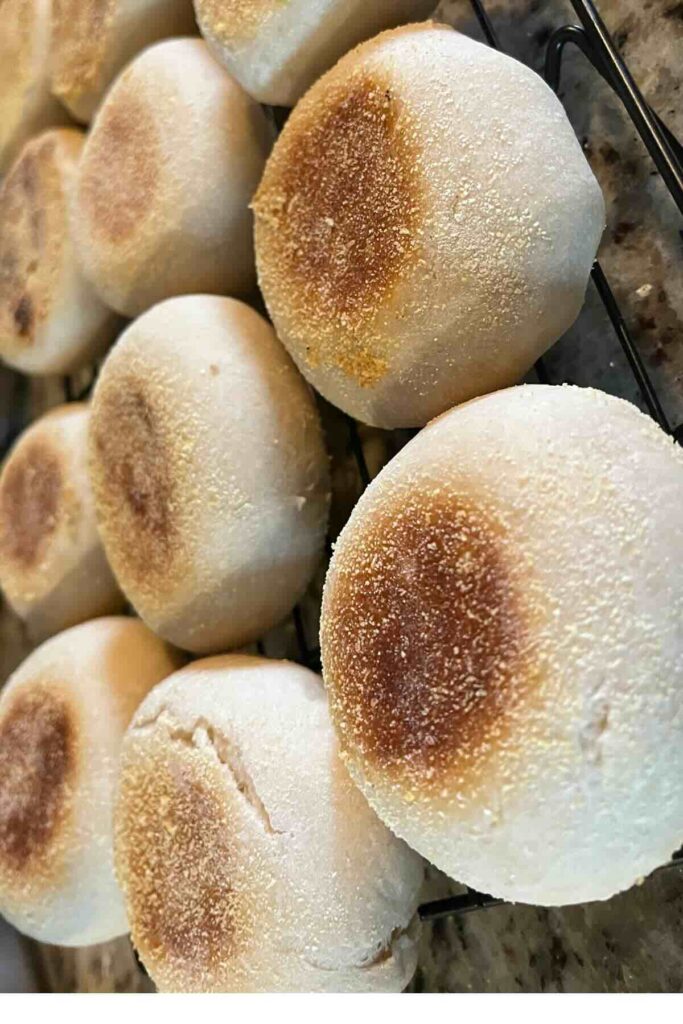
Step 9: Enjoy.
Bakers Timeline (one day recipe)
This recipe follows a timeline to have English muffins ready by a late lunch or dinner time the following day. We often use this recipe for Sundays – as we are a big ‘breakfast for dinner’ family!
If you need to speed up the fermentation period, place the bowl of dough onto of a warm oven in the morning. This will allow the dough to double in size faster. You can also place the dough balls on a baking sheet on top of a warm oven to complete the secondary rise faster, too. Use warm temperature to your advantage and adjust the sourdough to ‘warm’ conditions!
- 8PM (Day prior to bake): Make sourdough English muffin dough. Cover the dough with a lid or tea towel.
- 9 – 10PM (Days prior to bake): Complete stretch and folds until failure 1 – 2 times. Allow the dough to rest on the countertop.
- 8AM – 12PM (Day of bake): Dough should have doubled in size on counter.
- 12PM – 2PM (Day of bake): Divide and shape the dough into individual balls. Coat in corn meal. Allow them to warm up to room temperature and double in size on the countertop.
- The tops of the dough create a light film on the top and when pressed causing it not to stick to your finger. When pressed, the dough will bounce back.
- 2PM – 3PM (Day of bake): Bake the English muffins on the stovetop or a cast iron skillet. Allow them to cool for 15 – 30 minutes before opening.
Bakers Timeline (long fermented recipe)
If you would like a more ‘sour’ English muffin, would like additional health benefits from an extended fermentation period, or if you need time on your side, consider placing your sourdough English muffins in the fridge for a cold proof. The sourdough English muffins can sit within the fridge for up to 36 hours.
Because the long fermented sourdough English muffins spend a period of time in the fridge (bulk fermentation), this will extend how long the sourdough English muffins take to complete their second proof before they are baked.
The schedule below allows for a 35 hour fermentation period from the mixing the dough together to baking them fresh in the morning. Essentially, the dough is combined and they are baked two days later (IE not the day after they are mixed, but the following day at breakfast).
Day One (Two days prior to bake):
- 8PM: Make sourdough English muffin dough. Cover the dough with a lid or tea towel.
- 9 – 10PM: Complete stretch and folds until failure 1 – 2 times before allowing the dough to rest on the countertop.
Day Two (One day prior to bake):
- 8AM – 12PM: Dough should have doubled in size on counter.
- 12PM (day prior to bake) – 7AM (the following morning) (Bulk ferment in fridge): Place in the fridge, covered, until ready to bake.
Day Three (Day of Bake):
- 7AM – 9AM: Remove from the fridge. Divide and shape the dough into individual balls. Allow them to warm up to room temperature and double in size on the countertop. Do not skip this second proof or the English muffins will NOT be light and fluffy.
- The tops of the dough create a light film on the top and when pressed causing it not to stick to your finger. When pressed, the dough will bounce back.
- 9AM- 10AM: Bake the English muffins on the stovetop or a cast iron skillet. Allow them to cool for 15 – 30 minutes before enjoying.
How to bake English muffins in the oven
There are a variety of ways to make English muffins at home. One of our favorite ‘time saving’ hacks when making English muffins is to bake them in the oven. For a full tutorial, head to the recipe card.
To begin, you will want two sheet pans. When using the sheet pan method, you will want to refrain from putting any liner on the pan. Ensure the pan is oiled / buttered well. This will give you the classic ‘pan fried’ look, without having to toast them the skillet.
Once prepared (cut, shaped, coated in cornmeal, second proof), place the English muffins on the sheet pan. Cover the top of the pan with the second sheet pan, creating a ‘dome’. This will allow steam to trap inside the pan while they are baking. The steam will help them both rise and cook faster.
Halfway through baking, take the sheet pans out of the oven. Flip the English muffins over and place back in the oven. At this point, I keep the top pan off. The rest of the bake time is to ensure they are baked completely through.
The baked English muffins are ‘done’ when the internal temperature reaches is 190 – 200 degrees Fahrenheit. Allow to cool on a wire rack before eating.
How to store sourdough English muffins
Store sourdough English muffins on the countertop for 5 days. They will naturally become more sour as they sit.
If not eating right away we like to store in the fridge or freezer. We like to pierce them with a fork all the way around or cut them and keep an edge slightly attached. This makes it easy to keep the English muffins together in the freezer but allow for quick toasting when reheating.
Store the sourdough English muffins in the fridge for up to a week or in the freezer for three months. If putting them in the freezer, consider placing them in the fridge overnight. After they have sat in the fridge overnight, wipe out excess moisture in the ziplock bag to prevent the muffins from sticking together.

Frequently Asked Questions

Sourdough English Muffins
Equipment
- 1 mixing bowl
- 1 Cast iron skillet or baking sheet
- 1 Bench Scraper
- 1 Food Safe Thermometer optional
Ingredients
- 2-1/2 cups All Purpose Flour
- 1 cup Water
- 1/2 cup Sourdough Starter See notes about active starter vs. sourdough discard
- 1-1/2 tsp Honey Can substitute sugar or agave
- 1 tsp Salt
- 2 TBS cornmeal For dusting
Instructions
Knead Dough + Bulk Fermentation
- In a large bowl, mix together all ingredients but the cornmeal. The dough should come together by hand and not stick to the side of the bowl. If needed, add flour a tablespoon at a time to create a cohesive dough. Cover the dough and allow it to rest for 30 minutes.Stretch and fold the dough until it can stretch no longer. Complete the series of stretch and folds three times, about every 30 minutes. Cover the dough between stretch and folds. (Stretch and folds would look like this: Mix dough, rest, wait 30 minutes, complete stretch and folds – repeat two more times). Allow the dough to rest at room temperature on the countertop until dough has doubled in size.This could take as quick as 4 hours or 8-12 hours depending on the temperature of your home and if you use active starter or sourdough discard.
Shape and Second Rise
- Shape the dough into individual English muffins. To make a 'large' English muffin size – we weigh out 3 ounces (85 grams). To shape, tuck the edges of the English muffins to the bottom until they are a round shape. Place them into the palm of one hand and use your fingers on the opposite hand to press down almost like you are making finger prints (like dimpling when making focaccia). Do not use a rolling pin – it will pop too many bubbles! This step will help them to 'flatten', which will help with creating a 'flat' shape on top rather than a 'dome'. Next, coat both sides in corn meal and place them onto an oiled baking sheet. Do not put them on parchment paper (or they could stick – and if you bake them in the oven, the bottoms will not 'crisp up' / turn golden brown).Once all rolls are shaped, allow the sourdough English muffins to rise until doubled in size. This can take 1-3 hours depending on the temperature of your home. You will know when these are done proofing when they have doubled in size, when pressed the indent pops back and the exterior is not as 'wet'.
Baking English Muffins: Oven Edition
- Preheat the oven to 350 degrees. Place a second baking sheet on top of the English muffins – creating a 'dome' shape, (not stacking the coupling pans into each other). This will create steam and allow the English muffins to rise. Allow the English muffins to bake for 10 minutes. Remove the pans from the oven. Flip the English muffins. Do not add on the top sheet. Place them back in the oven for another 5 – 10 minutes to cook the remainder of the way. At this point, you can temp check them to see how close they are to being completely cooked. Fully cooked English muffins will temp between 190 – 200 degrees. Place on a wire rack to cool completely. Slice and enjoy!
Baking English Muffins: Cast Iron Skillet Edition
- Heat your cast iron skillet to medium low (for us – this is about a 3-1/2 on a scale of 10). Oil your cast iron skillet. Place 4-5 English muffins in your skillet. Cover with a lid. Allow them to bake for 4-5 minutes, or until the bottoms have turned slightly golden brown and easily pull away from the pan. Flip the English muffins, cover and bake for another 4-5 minutes. The English muffins are done once they reach an internal temperature of 190 – 200 degrees. It is important to note the second and following batches will cook faster as the cast iron skillet retains heat!Place on a wire rack to cool completely. Slice and enjoy!
Video
Notes
- Active Starter vs. Sourdough Discard
Because this recipe uses active sourdough discard, no additional leavening agents are needed to create ‘rise’ within the English muffins. If you do use sourdough discard, consider allowing the impact on rise time. If your starter came from the fridge, the initial bulk fermentation period will take longer as the starter ‘wakes back up’. - Importance of Secondary Rise
It is so important for the English muffins to complete a secondary rise. Without this step, they will be dense and not have nearly as many nooks and crannies! Be sure to push both the first and second rise to give the fluffiest, lightest English muffins.
Nutrition
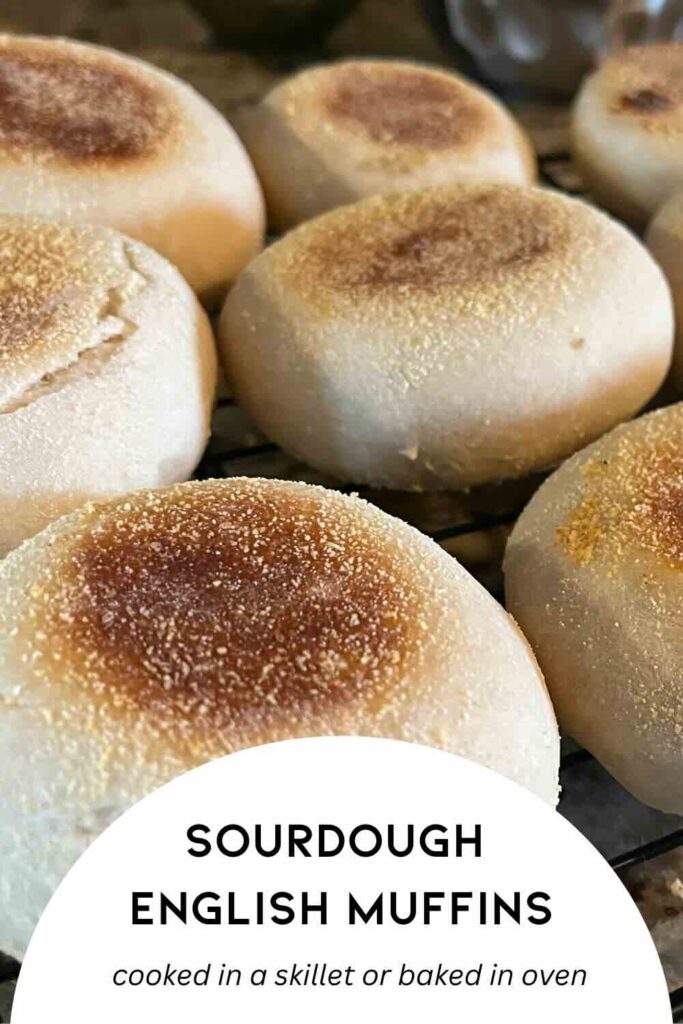
How do you like to eat your English muffins? Let us know in the comment below!


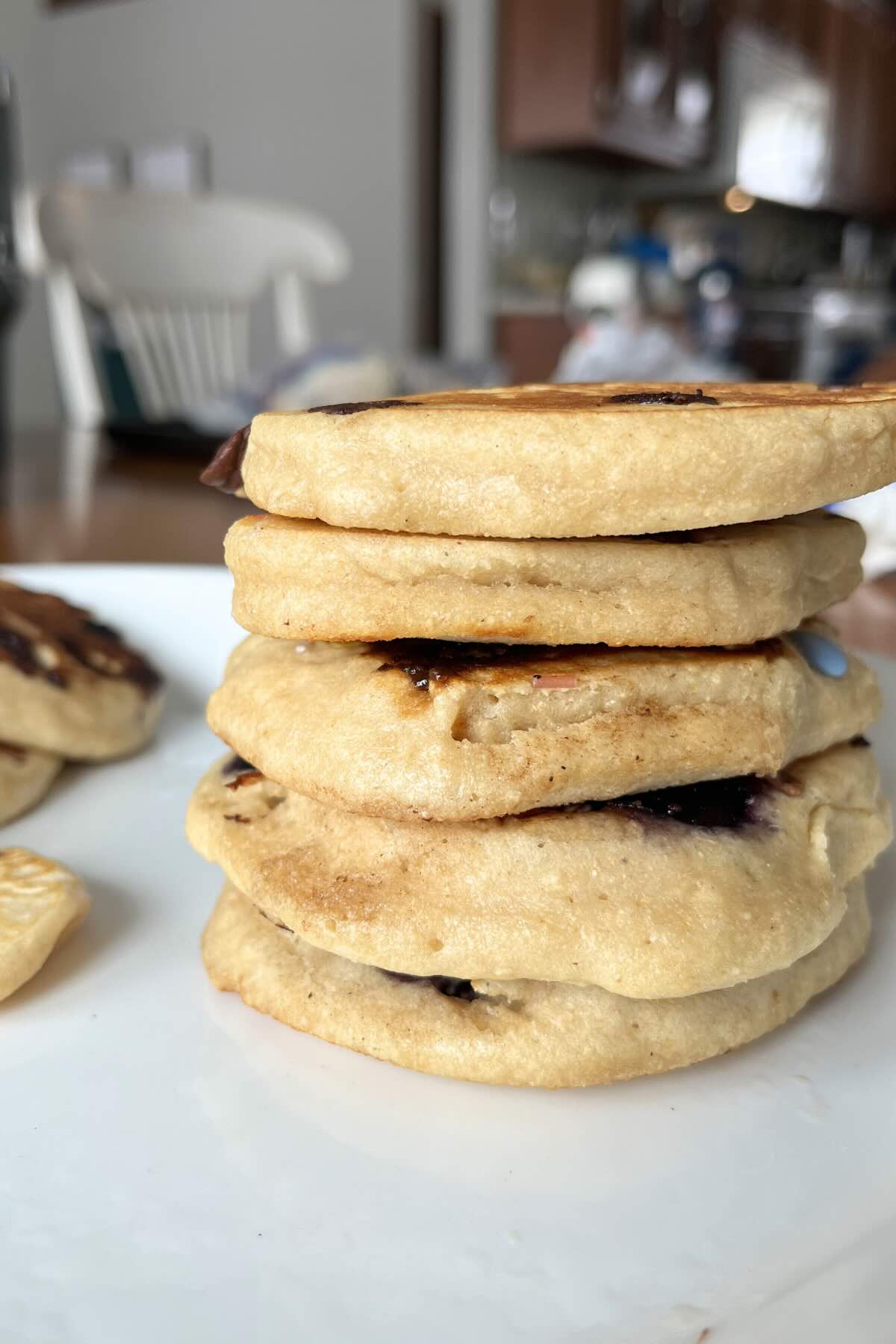


If I could, I would share this English muffin recipe with everyone! The dough comes together really easily with a few easy stretch and folds. I also love that these can be made in a skillet or in the oven depending on your schedule!