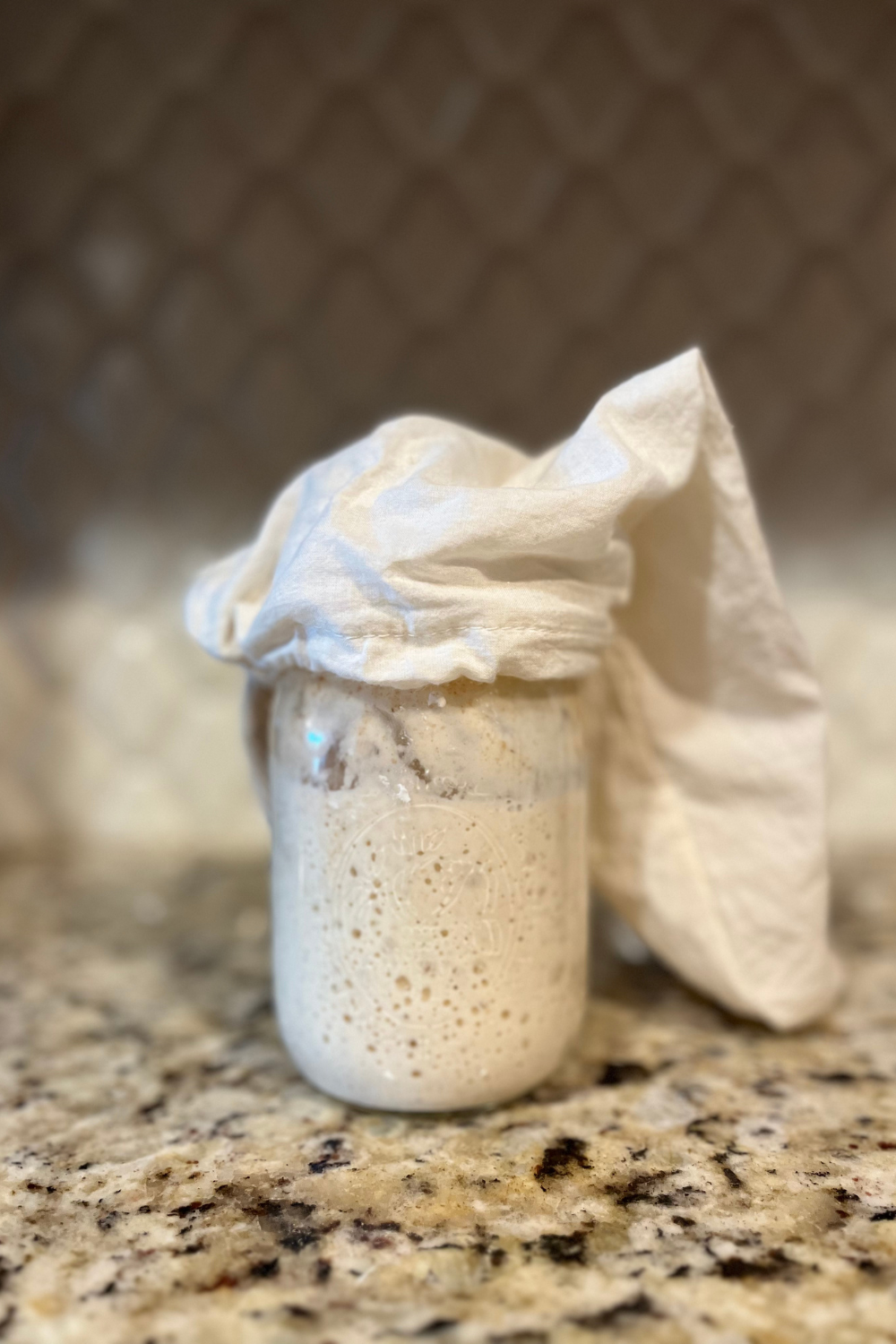
Achieving the windowpane is one a great way to check the strength of gluten within your dough. When baking with sourdough, this step in the kneading process can be achieved by hand or by mixer. If you have ever wondered what it means to achieve the windowpane or how to do it, this blog article is for you!
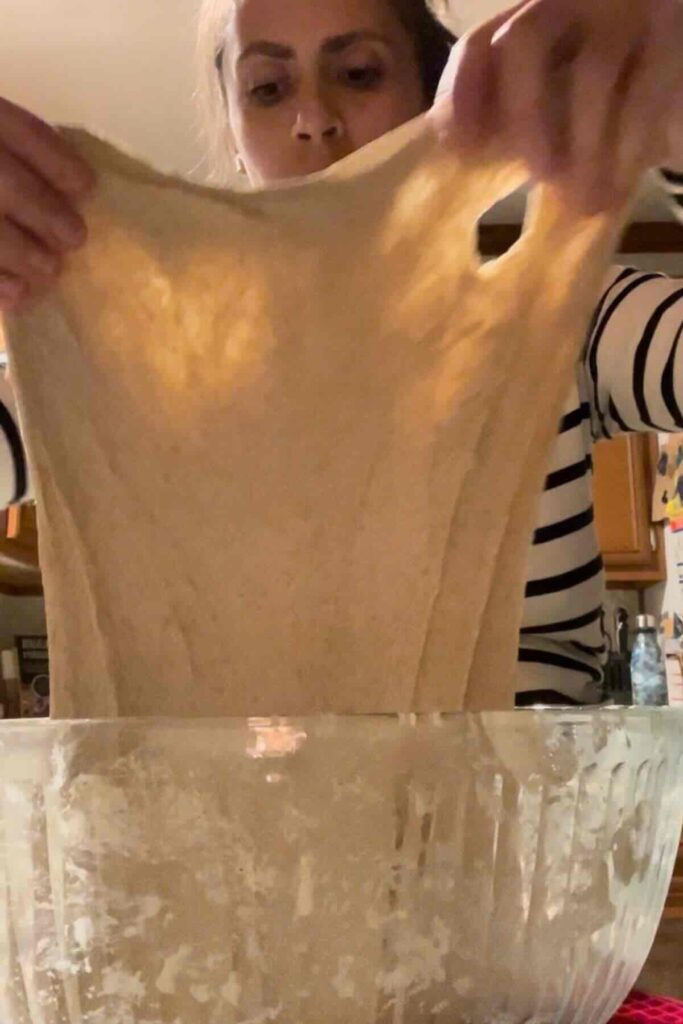
There is a common misconception in the sourdough world I think needs to be talked about. You do NOT need a stand mixer to be able to make sourdough baked goods! Even the ‘tricky’ ones like sourdough panettone, sourdough bagels, or sourdough pretzels. Even a a brioche dough (like sourdough cinnamon rolls).
Truly, you can knead any sourdough baked good by hand. It may take a little extra time and not as much energy as you would expect to come together.
When I started my sourdough journey, I use to think I had to knead my bagels and cinnamon rolls for 15 minutes in a mixer or 30 minutes by hand in order to ‘achieve’ the windowpane test.
I have a very specific memory of kneading sourdough cinnamon rolls by hand for 30 minutes to “achieve the windowpane” before I made them for our family. This experience is what ultimately made me look for a stand mixer. I kept saying ‘there is no way I can make something that requires more kneading – like bagels – without a mixer’.
After a few years (and learning to adapt sourdough to my schedule – not the other way around), I have come to realize I do not need to be as ‘hands on’ as I thought. My current sourdough approach has me playing with my kids more and not sweating in the kitchen before breakfast (haha!).

What is ‘windowpane’ / a windowpane test
The windowpane test is a way to test gluten development and strength within your dough. It is one way to gauge is a dough has been kneaded long enough to build strands of gluten. This can show the ‘strength’ of your dough.
This test is completed during the kneading and stretch and fold process. It occurs after mixing your dough together. It occurs prior to completing bulk fermentation.
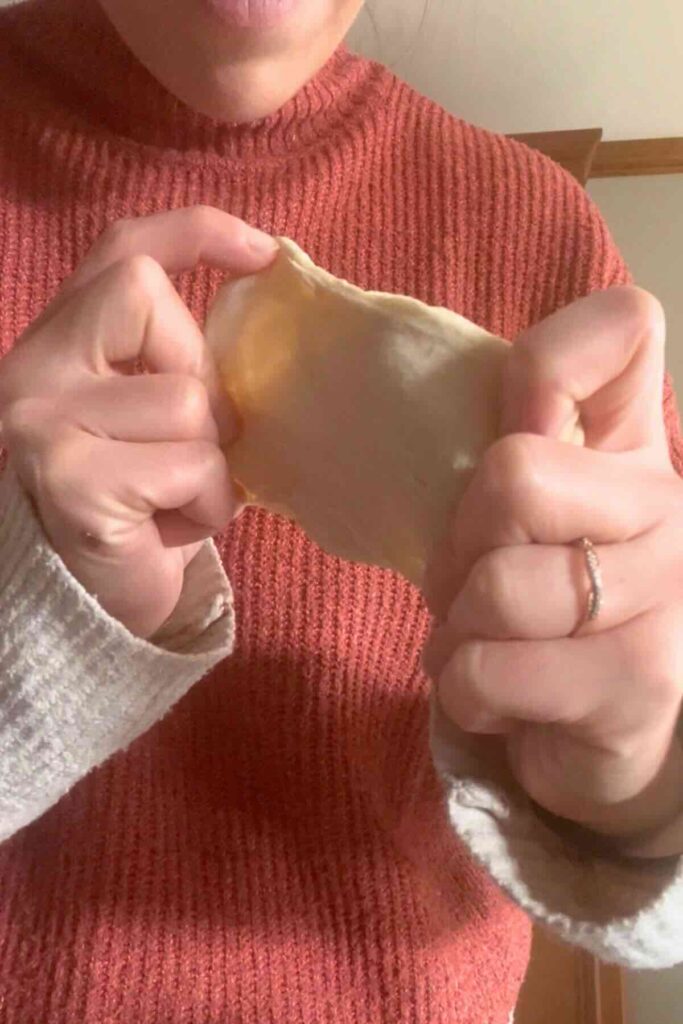
How to complete a windowpane test
To complete a windowpane test follow these steps:
- Grasp your dough between your fingers (or if you are working with a segment of dough, gather a handful of dough).
- Stretch it between your fingers.
- Assess visual cues and dough tension. When you stretch it apart, it will hold together and look like a ‘window’ when stretched. This means you will be able to see through slightly, however the dough will not break unless stretched far.
- If you stretch and the dough tears apart instantly, it is not kneaded long enough.
- If you stretch and the dough stays together, creating a windowpane, it is kneaded long enough.
- Be careful not to over knead. This can cause the dough to be stiff and unable to stretch.
When to test dough strength
Complete the windowpane test while you are kneading (and stretching / folding) your dough. You can complete this test as frequently as you would like to get a better hand on how the dough feels.
It is important to remember that because of the process of creating sourdough, whether it is bread, cinnamon rolls or bagels, you will build strength in your dough when stretching and folding as well.
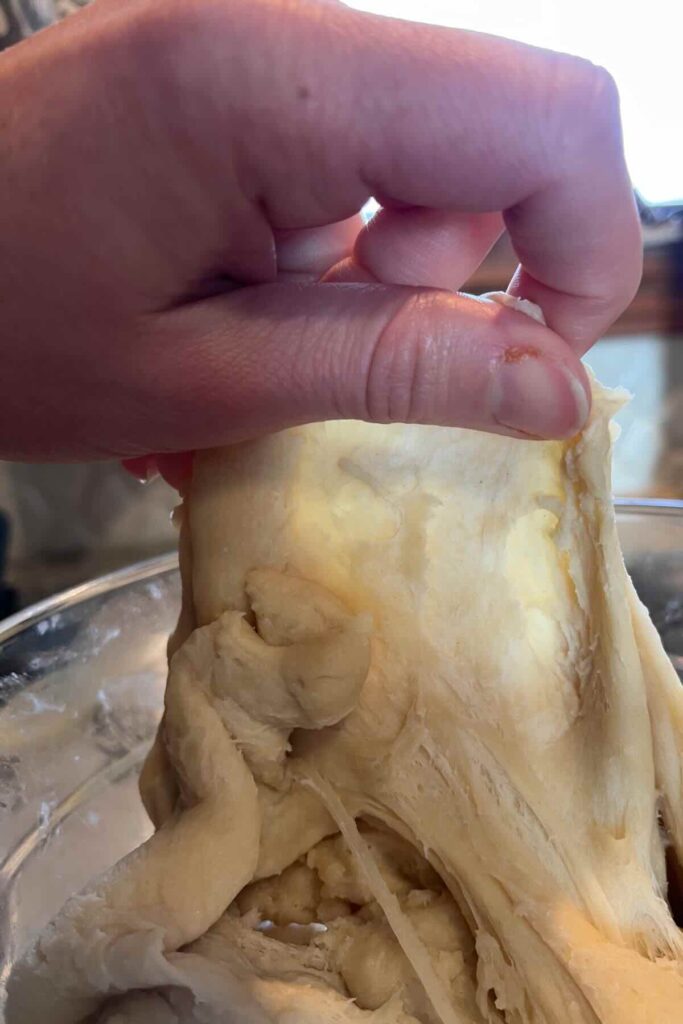
How to achieve windowpane by hand
Achieving a windowpane while working with sourdough is absolutely possible by hand. By completing a series of stretch and folds – while allowing the dough to rest in between – you will build gluten strength and have stronger bonds in your bread. Not only will this allow you to see how your dough changes with time, but you will be more in tune with the changes dough goes through time and how dough feels rather than how it looks.
While this method can take a little longer than using a mixer, you can make it work with your schedule. We recently have been preferring this method because we can walk away and let the dough do the work. I have found more dough seems softer and has better texture than when using a mixer.
Tips to use your hands to stretch, fold and knead dough include:
- Take a slow and steady approach.
- Allow your dough to complete an autolayse for 15 – 30 minutes before attempting stretch and folds.
- Do not be afraid to walk away and do stretch and folds. Remember, you are NOT tied down to a timer!
- Come back over a series of hours to work with your dough – rather than competing it all at once.
- Perform series of stretch and folds – until failure
- Consider performing a series of stretch and folds (or coil folds if your dough has high hydration) until the dough can stretch no longer. Come back after time has passed before attempting this again.
- See dough texture change in time
- Being able to feel your dough, you will see the texture change. This can help you be more in tune with your dough.

How to achieve windowpane by mixer
If you have a mixer at home, whether it be a Kitchenaid, Bosch, Ooni, etc. you can use it to mix your dough. A mixer can be a time saver if you do not want to stretch and fold your dough to build tension. For those who are unable to buy a mixer due to cost, lack of room within a home, or lack of interest in having a kitchen appliance, you can work around it.
Here are some tips to achieve the windowpane within your dough when using a mixer:
- Let the dough ‘hydrate’ before mixing
- Rather than running your mixer until it overheats – let your dough sit before turning the mixer on. By allowing the dough to hydrate for 10-15 minutes before mixing, you will shorten the time the dough kneads.
- Slow and steady
- Keep your mixer on the recommended speed. Do not speed up your motor to encourage it to come together faster – this will cause stress on the motor and potentially cause it to overheat or break.
- Pause and return
- When checking how closer you are to achieving the windowpane in your dough, pause.
- If your dough does not seem like it is achieving the windowpane texture, consider letting it rest and mixing again in 10 minutes. Sometimes the dough just needs to relax and the dough needs to soak in the liquid.
- Consider starting or finishing stretch and folds by hand
- While counter intuitive to buying a mixer, it can be helpful to test the strength of your dough and complete a few stretch and folds by hand.

What are your thoughts on achieving the windowpane? Do you use it to gauge the strength of your dough? Let us know in the comments below!