In a time where AI is popping up left and right, it is time to lean in and use it for the good. There are a number of ways how using AI can help you become a more educated and well-versed sourdough baker. These are some ways to get better answers from AI along with positive and negative aspects to consider when using it while baking.
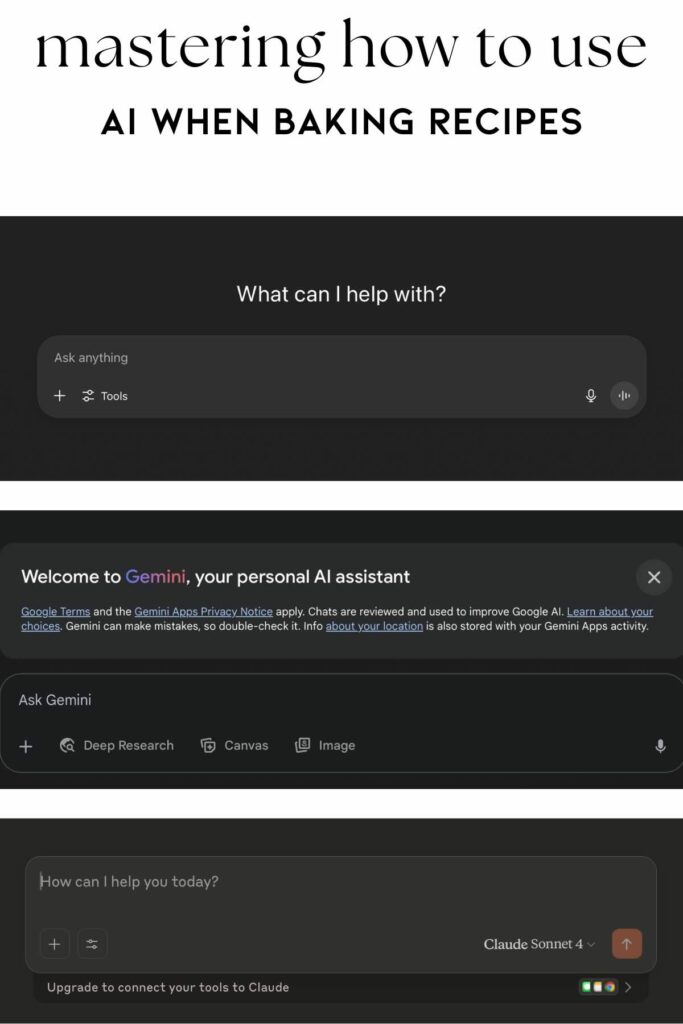
With LLM (language learning models) popping up left and right, there are so many diverse ways to use the programs in every day life. From making a meal plan with AI to have AI do a ‘crumb read’ on your sourdough bread, the options are infinite. And there is no end in sight!
For food bloggers, this can be a scary time as we navigate how to ensure the best recipes end up in your search. Something which is tried and true, not something thrown together by a robot. That is one reason why my website will not use AI for recipe generation or blog post creation (for speed or to ‘keep up with the times’).
In short, love connecting with readers and sharing stories. I love sharing my journey from eating gluten free to healing my gut and becoming a sourdough enthusiast after 14 years of trial and error.
One thing that has shifted, however, is my perspective on how to use AI in life as we learn to adapt to changes in search platforms, like Google. Food bloggers, myself included, may receive less ‘click thru’ to a website – however those who do are ‘quality’.
As a food content creator, I have learned ways to make my business run smoother with AI. I would be happy to go into detail about this some day if anyone is interested!
So let us dive in on how you, a sourdough baker, can start to lean into AI to make the best of your sourdough journey.
How to get better answers out of AI ‘prompts’
One thing that is important to remember with AI is the results are only as good as what you put in. A good way to think about AI is the programs are developed to deliver a higher level / more developed version of auto populate.
AI programs like ChatGPT, Microsoft CoPilot, Gemini or Claude utilize prompts to give you an end result as a combination of answers it collectively sources from the web. It can give you a specific answer based on the context you provide.
If you provide AI, like ChatGPT, a broad question with minimal context, your answers will be hallucinated, not specific and may not have the result what you are looking for. Below are a list of tips which can help you to tailor the best responses with a AI search engine.
Note, the tips below do not have to be utilized every time, especially if you enter into the same chat / thread previously used.
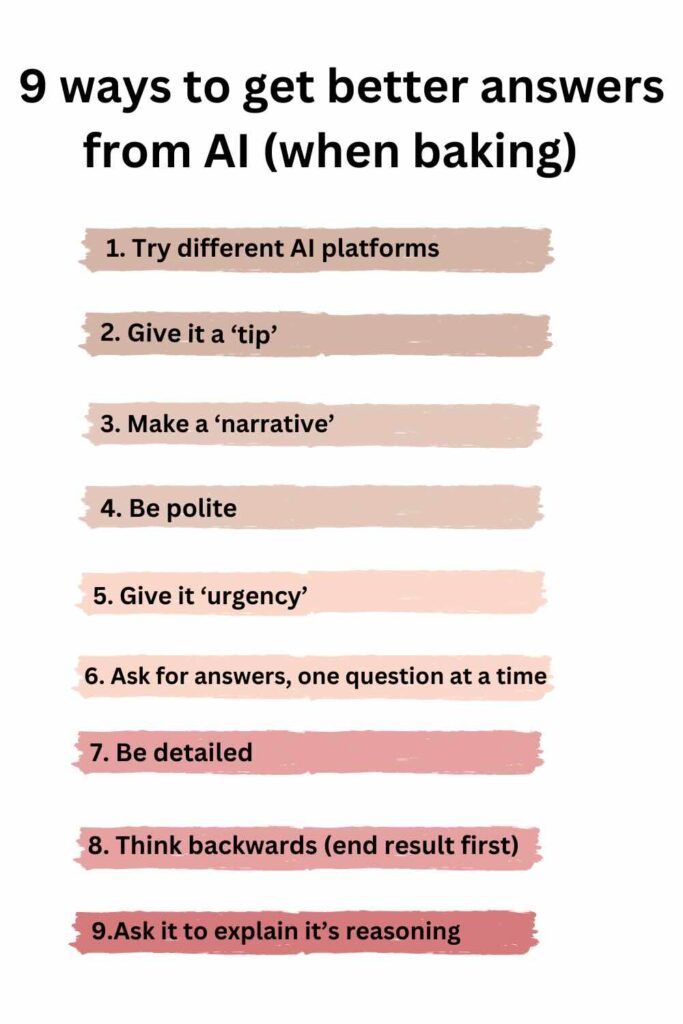
- Try different AI platforms. There are a variety of different AI platforms. The most widely recognized today are ChatGPT and Microsoft CoPilot. However, Gemini and Claude are two great platforms as well. They all specialize in something different – and if you use your free trial on one AI platform for the day, you can use another platform to continue the results.
- Give it a ‘tip’. State “I will give you a $500 tip for every correct answer your provide”
- By incentivizing the AI, you are more likely to get a good answer. We do not know why quite yet, but it causes AI to ‘think’ a little more.
- Make a ‘narrative’. Even if you do not have the paid version of ChatGPT, you can create a narrative to tailor better responses. For example, if you want to make sourdough bread and have some years of experience, state “I a professional baker with 15 years of experience trying to troubleshoot a loaf gone wrong. I need help troubleshooting why your my sourdough loaf is raw. Can you provide context about what may have happened?”
- Apply this technique to any scenario. It can be a fun and creative way to help you get through baking ‘ruts’.
- Be polite. Saying ‘please’ and ‘thank you’ goes a long way.
- Give it ‘urgency’. If you say, “I need this answer as my job depends on it. Without this job I can not pay my bills“.
- LLM’s are learning that humans are becoming sensitive to time (just consider how popular Amazon Prime is for speedy delivery). AI researchers have stated if there is a sense of urgency, answers will be more tailored. By stating the importance, you can get a better result.
- Ask for answers, one question at a time.
- If you ask multiple questions, ask the AI model to stop and think. Have it answer questions one at a time. This ensures it does not combine answers to each question as a singular answer.
- Be detailed. Guide the questions. The more detailed you can be, the better the answer.
- Think backwards. Consider the end result and think about what your ‘perfect loaf of sourdough bread’ would look like. Take that thought and go from there.
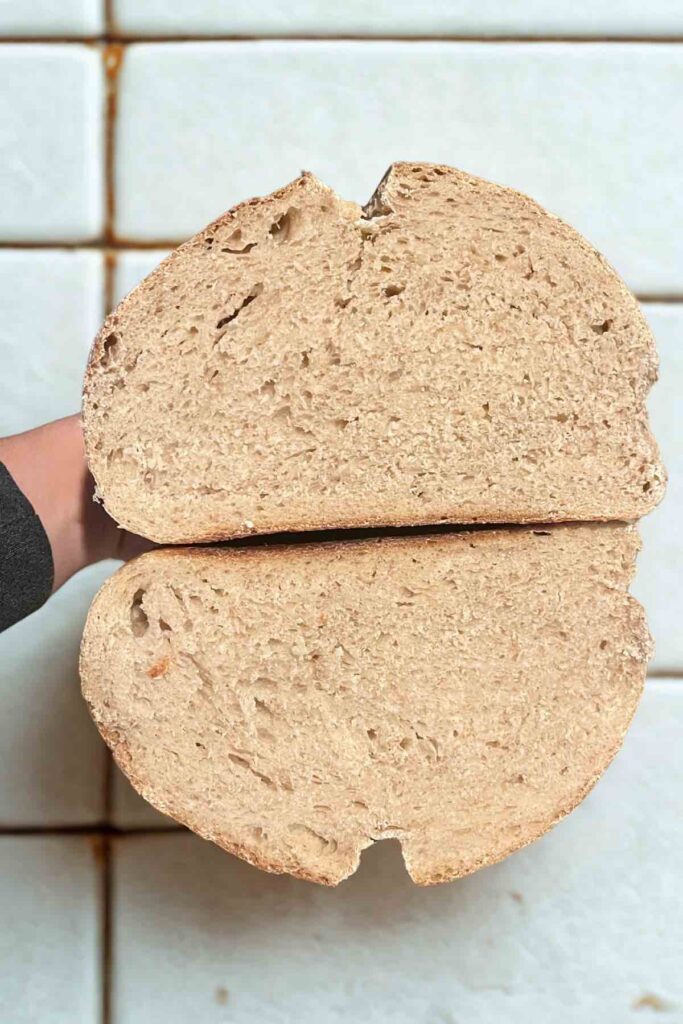
- For example, you can say “I want a soft sourdough rye bread with a bubbly top, soft crust, and open crumb. I open bake sourdough, not in a dutch oven. Can you walk me through the steps to achieve my perfect loaf? ”
- The results are astounding. It can give you tips on your schedule, what to feed your sourdough starter with, troubleshooting ideas and of course – tips and tricks.
- Ask it to explain its reasoning / thought process.
- By asking AI to explain its reasoning, it is less likely to hallucinate an answer. It will share where it gathered the information and explain why it answers the question the way it did.
If we are being honest, everyone has their ‘perfect loaf’ in mind. Some people like extra sour – sourdough bread while others prefer the health benefits of long fermenting sourdough. Use these tips to generate the best sourdough bread for you.
Positives of using AI while baking
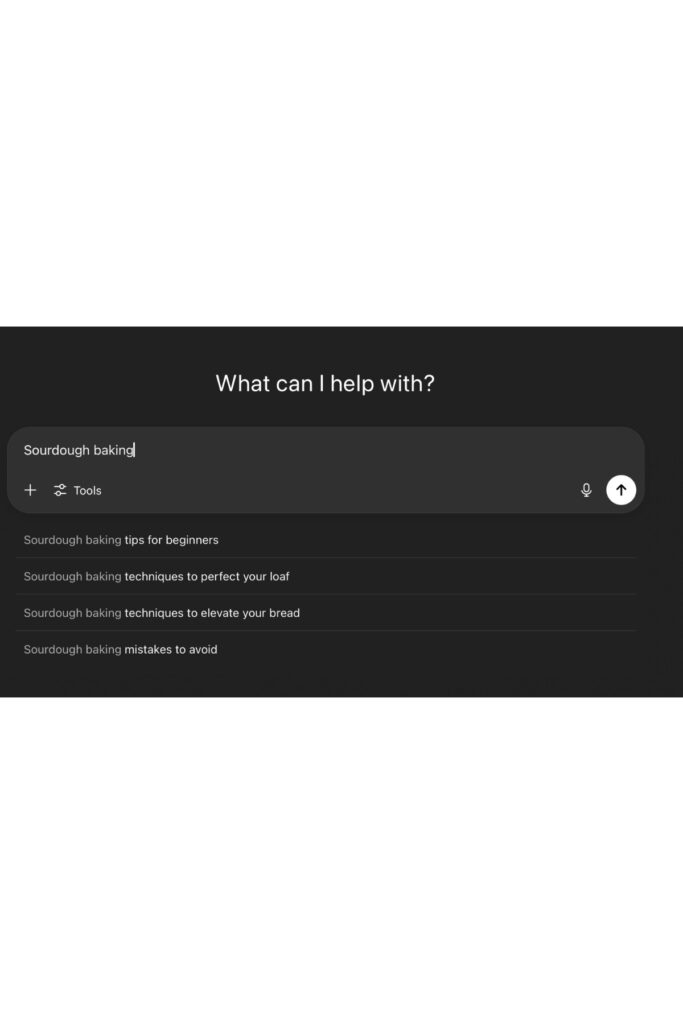
Using AI when baking has positive impacts. The conversation like tone can help you break through barriers and mental blocks preventing a loaf of bread from meeting your expectations. Using AI while baking can:
- Provide new ideas when you are stuck or help you to troubleshoot problems
- Help reduce research time to get you closer to the final result you are looking for
- Help you find resources you may not have heard about, like this blog. Perhaps you even found this sourdough blog through an AI overview!
- Act as a personal assistant or intern – helping you answer the questions you want the answers to without too much trial and error.
Negatives of using AI while baking
Of course there are draw backs when using AI while baking. An important factor to remember is, AI is not real a human. It is programed to read and analyze data. However, it does not have ‘experience’ in the real world of baking and has never physically created a recipe before. Some negative considerations of using AI while baking include:
- No recipes have been tested in person. If you have questions, you may get an answer – but they can not be vouched for.
- It is important to remember AI has not tested recipes. I created this recipe blog to test and trail recipes a handful of times beforehand so you do not have to. I tweak recipes and instructions based my experience. AI does not have this advantage.
- If the prompt is not direct, AI may lead you to more confusion as the results may not be what you are looking for.
- If something does not exist, AI can create it for you.
- This can be good or bad considering not every recommendation is a good one. (Remember when AI recommended using ‘glue’ instead of cheese on a pizza?)
If you are looking for AI prompts to use in your sourdough baking, try out some of these sourdough AI prompts!
Have you tried chatGPT or using another AI platform during your sourdough baking journey? Let us know your thoughts and ideas below so we can test it out for ourselves.