
This post may contain affiliate links. Please see our privacy policy for more details.
Making sourdough bread with a soft crust is not nearly as complicated as people make it seem. It truly comes down to temperature, how you bake your sourdough and how the bread is handled after it is baked. If you like sourdough bread with a softer crust – this one is for you!
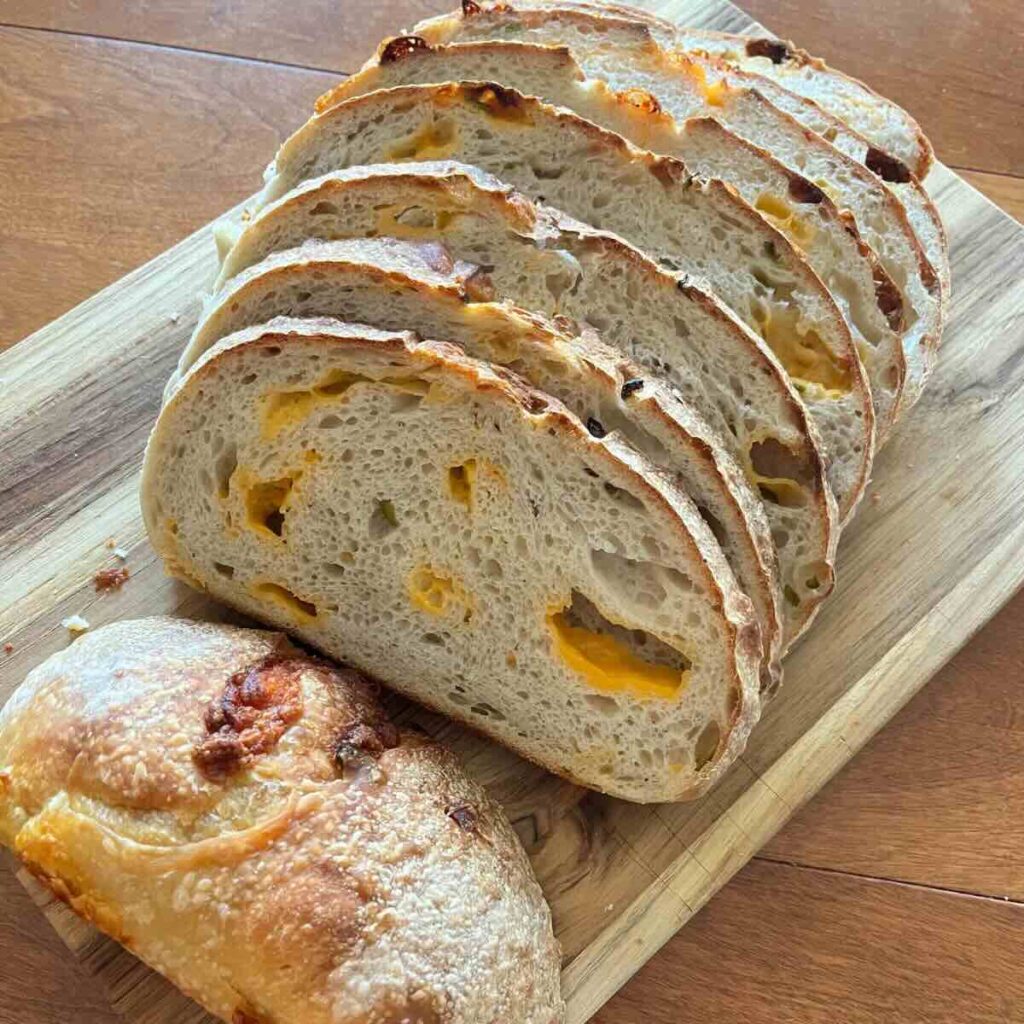
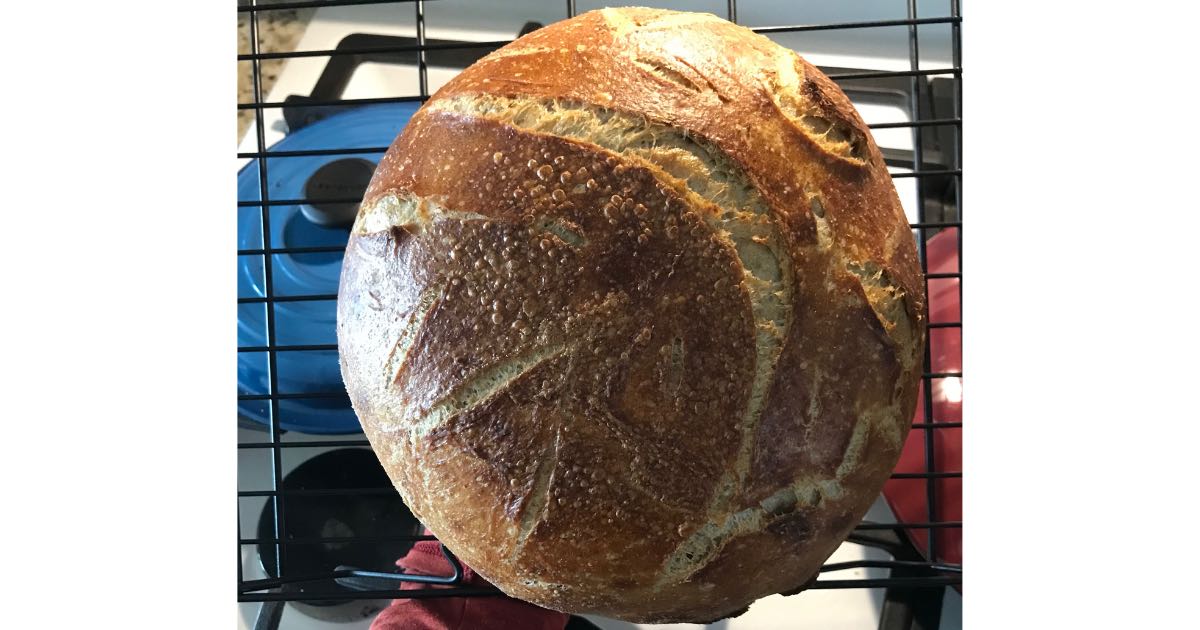
If there is one thing I could shout from the rooftops about sourdough is – not everyone likes a crispy crust! Seriously – artisan sourdough bread can be SO crunchy. To the point where if you toast your bread on top of it already having a crispy crust – it can be difficult to eat.
And when you have kids at home who are already particular about their food – having a piece of bread they will eat the full slice of is important. In our household we have devised a few different methods to ensure a soft sourdough crust (without needing to change the ingredients of the bread).
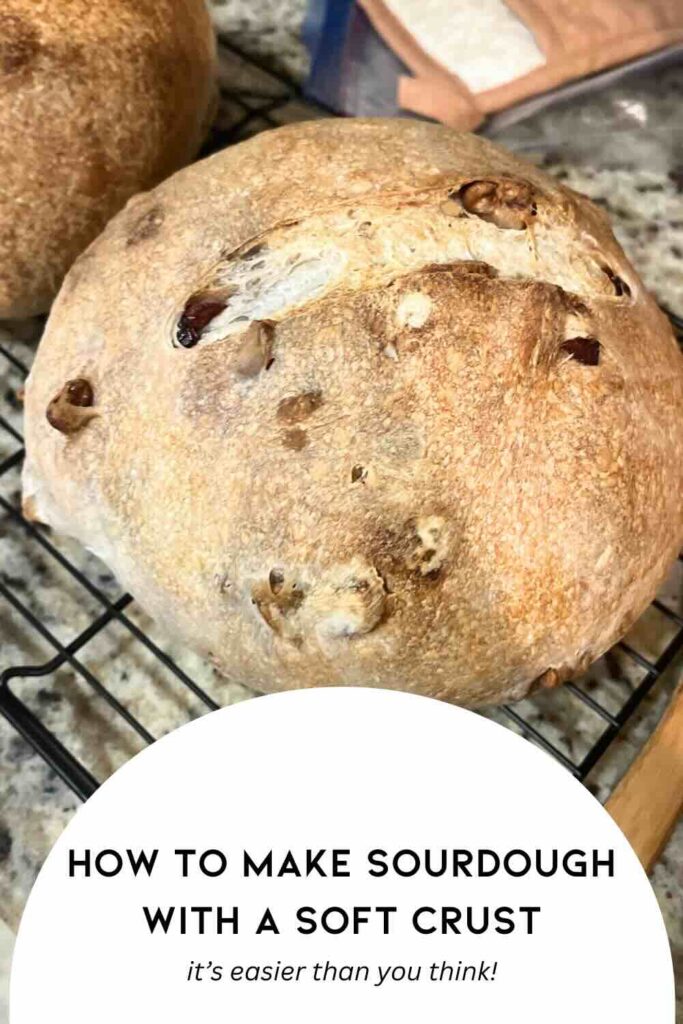
If you like Aldi sourdough bread – I made a copycat Aldi sourdough bread recipe that we have based all our other bread recipes off of. We have a soft crust sourdough cranberry walnut bread and a soft crust sourdough jalapeño cheddar loaf that just hit the spot. Every time.
This reiterates why I began my blog – to provide sourdough education and to help those who are gluten free have food freedom through sourdough. This education I hope these tips help you when you want a soft crust sourdough recipe on hand. This has been a game changer in our sourdough journey!
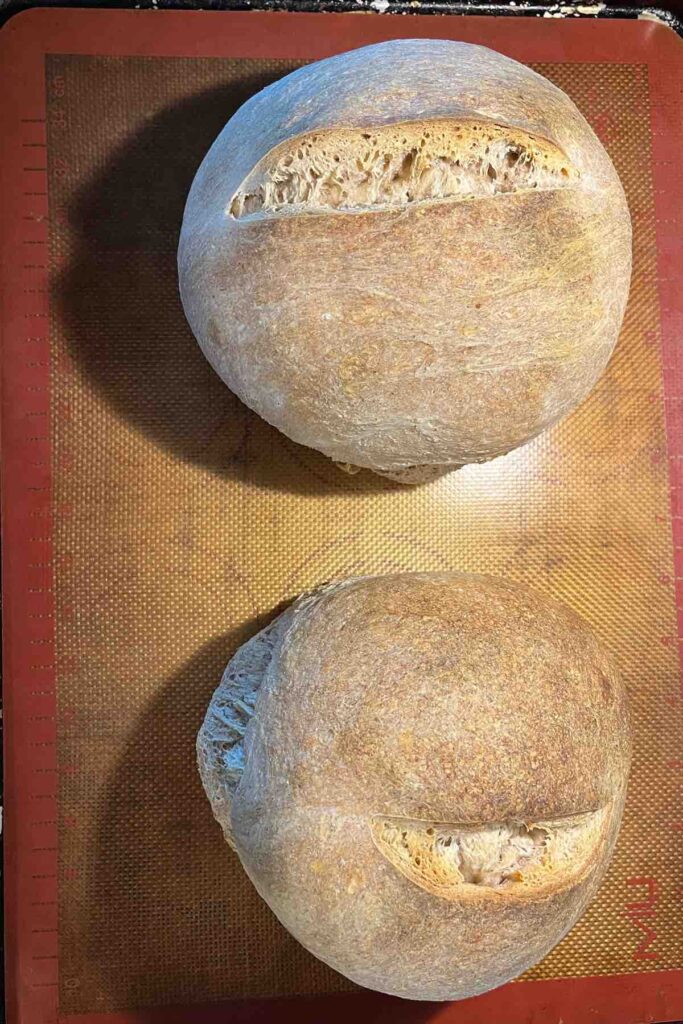
Using open bake to make sourdough with a soft crust
I have personally found my favorite way to cook sourdough bread is open bake style. Not only does this allow us to fit more bread in the oven at once, it keeps the temperature consistent, the bread is not burnt on the bottom.
A lot of beginner sourdough recipes will require a dutch oven to bake. Not only can these be expensive, but they will most certainly come out with a crispy crust. Sourdough made in a dutch oven is typically cooked at 475 or 500 degrees Fahrenheit for 25 – 30 minutes (lid on). Then it is baked at 425 – 450 degrees Fahrenheit for 20-25 minutes with lid off.
The time with the lid on helps the dough to rise (thanks to the steam trapped inside). The time with the lid off creates the crispy crust – giving you the ‘artisan’ appearance.
However, if you want a soft ‘sourdough sandwich bread’, I encourage you to try open baking. Plus, if have a strong sourdough starter and understand bulk fermentation your bread will turn out great.
I have both a gas oven and an electric oven. Both work perfectly fine with this method.
Temperature and crust
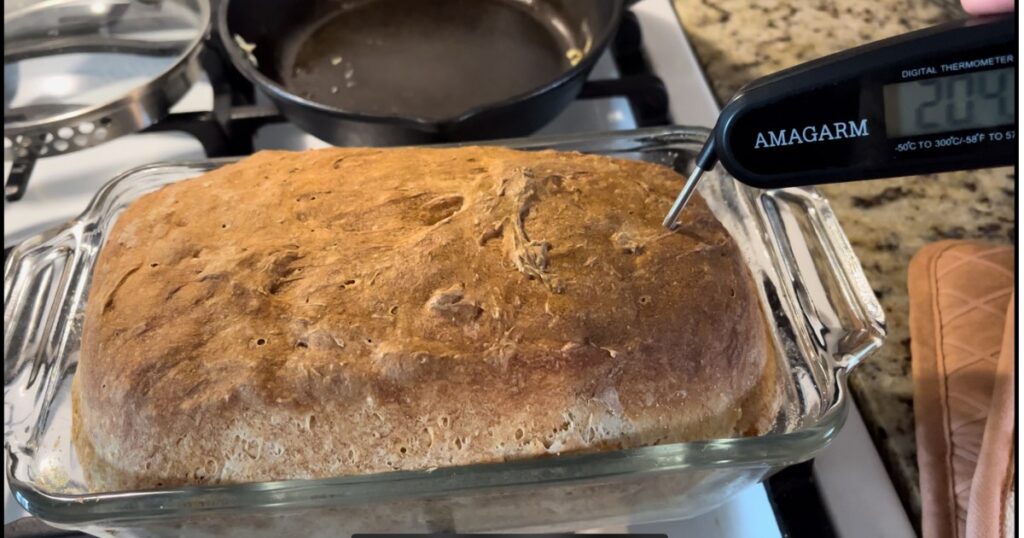
One key we have found temperature is a key factor in how soft the exterior of bread is. Not only with the temperature of the oven – but the temperature of the bread.
- Temperature of the oven
- We personally like to bake our bread ‘open bake’ style at 425 degrees Fahrenheit. For whatever reason, this seems to cook the bread well without making the crust too hard. Our bread still has great rise and browns lightly on the exterior.
- Temperature of the bread (when done baking)
- Any item baked in the oven has carryover cook. We prefer to pull our sourdough at 190 – 200 degrees Fahrenheit. As it sits, the dough continues to cook and ensures the texture on the interior is soft (and not gummy) – unless you cut into your loaf before it is done cooling, that is.
- We use our food thermometer for everything from sourdough brownies to sourdough cinnamon rolls – and most certainly bread!
Enriched sourdough bread for a soft crust
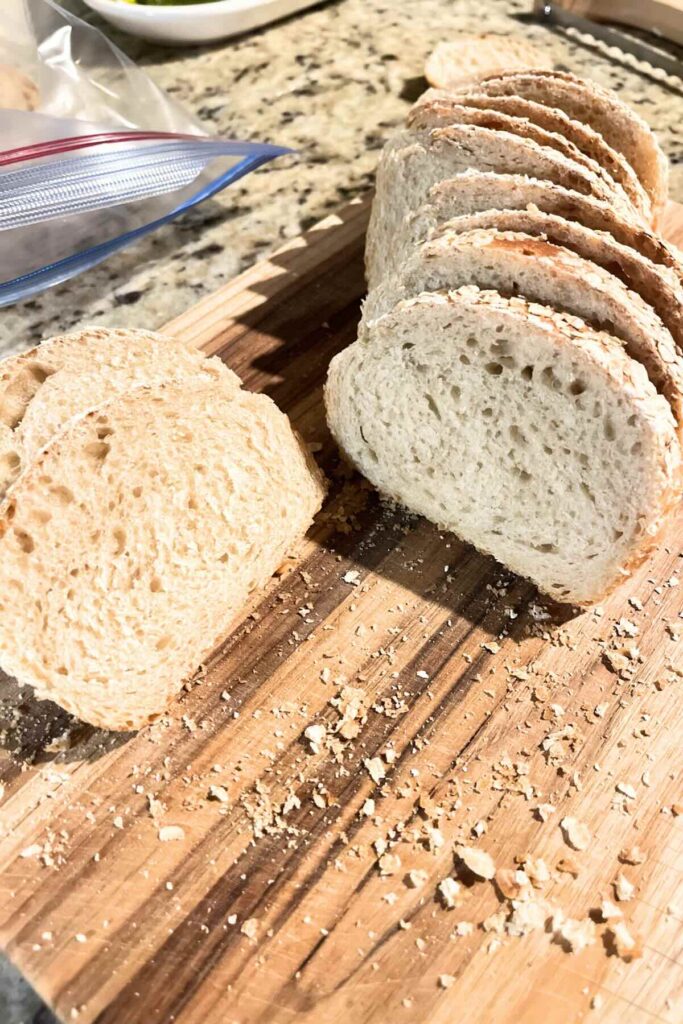
You can add ingredients to your bread like milk, oil, egg, butter and honey to enrich your bread. This can create a softness which is both interior and exterior thanks to the higher fat content.
It is important to note if you add more ingredients to bread, it can change the hydration and fermentation speed. This can also become difficult to work with to shape if not prepared.
The bread also may require you bake in a loaf pan to hold the shape and structure. However, like sourdough pull apart bread, you can work your dough to encourage strength. If the bread has enough strength, it can open bake in the pattern you want.

Steam / spraying bread before baking
Another soft crust hack is to add steam into your oven or spray your loaf with water before baking.
When we make a honey oat sourdough loaf or everything but the bagel seasoning sourdough loaf, we wet our hands with water to encourage seasoning / flavor to stick. This can seal in additional moisture to the outside of the loaf.
I do not recommend drenching your loaf with water on the outside. You can always add a little water. This addition of steam will also encourage your loaves to rise higher. Note – if you have a gas oven, it has a different way of removing steam from the oven than an electric oven. This method may not work for you.

Handling your sourdough bread after it is baked
The last tip I have for making sourdough with a soft crust is to ensure you handle it properly to encourage a soft crust upon baking it.
- Wrap in a towel: As your bread is cooling, remove it from the sheet pan and place it onto a cooling rack. Wrap the bread in a tea towel (or light towel). This will allow some steam to escape without retaining moisture that it makes the bread soggy.
- Place on a cooling rack: A cooling rack is so important to ensure your bread does not get a hard or soggy bottom. While those can seem like polar opposites, the bread needs to cool and steam will escape on all sides. By allowing the bread to cool on a cooling rack, the steam can escape on all sides. If it sits on a sheet pan it will retain heat and also continue baking.
- Slather with butter: If you are making a sourdough sandwich loaf, you can always coat it in butter upon removing it from the oven. This is a simple trick we use to add moisture to items like sourdough pretzel bites and sourdough garlic knots. I know are not the only ones who believe butter makes everything a little better!
- Store in a plastic bag: Storing your bread in a plastic bag can help. After your bread has cooled completely, you can close it in a plastic bag for storage.
While this may not make your bread stay fresh for a long period of time (because it traps moisture), it can ensure the crust stays soft. If you store your bread in a paper you run the risk of getting stale sourdough bread faster.
Do you prefer a soft sourdough crust or a crispy sourdough crust? We are team soft sourdough crust – because we find it helps with less food waste in our household and our kids will eat an entire piece of bread – which is great for us! Let us know your thoughts in the comments below.

I love having a softer crust so thank you for this!
Love this recipe! Who doesn’t love a soft crumb!!
Glad you enjoyed it!